Background in mini case studies
I make experiences that balance the client's needs with business goals.
My favorite projects live in complex ecosystems and rely on service design and holistic thinking to create value for clients and businesses.
Artificial Intelligence
Increased lead generation by 30%

Director of AI UX
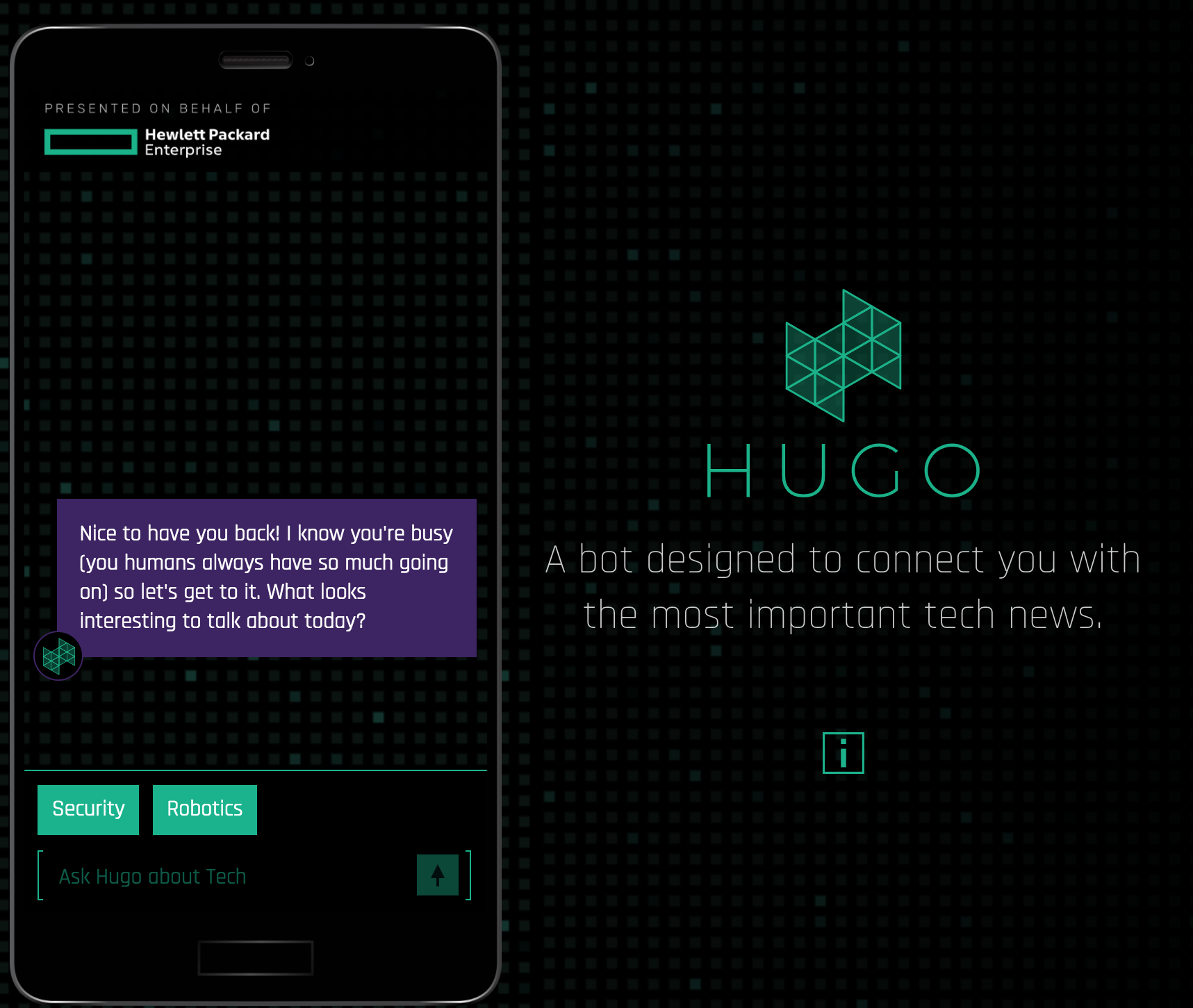
On a generative AI project for Hewlett Packard Enterprise, I led the chatbot's experience and conversational design, and built the taxonomy structure to support the NLP framework. I also concepted the analytics portal used to track the bot's performance and manage hallucination risk.
The bot, named Hugo, generated a 30% increase in qualified leads over traditional gated content, while cutting cost-per-lead by a third. It became HPE's most efficient early-funnel channel.
Increased efficiency by 400%

Executive Director
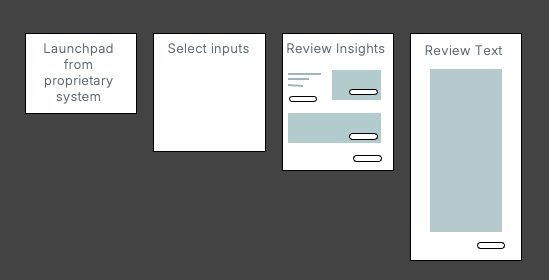
I pioneered an iterative AI tool for a highly regulated employee decision-making flow, establishing the UX framework that took a task from 40+ hours to approximately four. This was one initiative within a broader wholesale digital and innovation mandate.
Beyond the time savings, the work increased throughput and expanded capacity at a critical operational stage — the kind of measurable business impact I look for in every project.
End-to-end Applications
Generated over $700M in sales volume in beta

Associate Creative Director
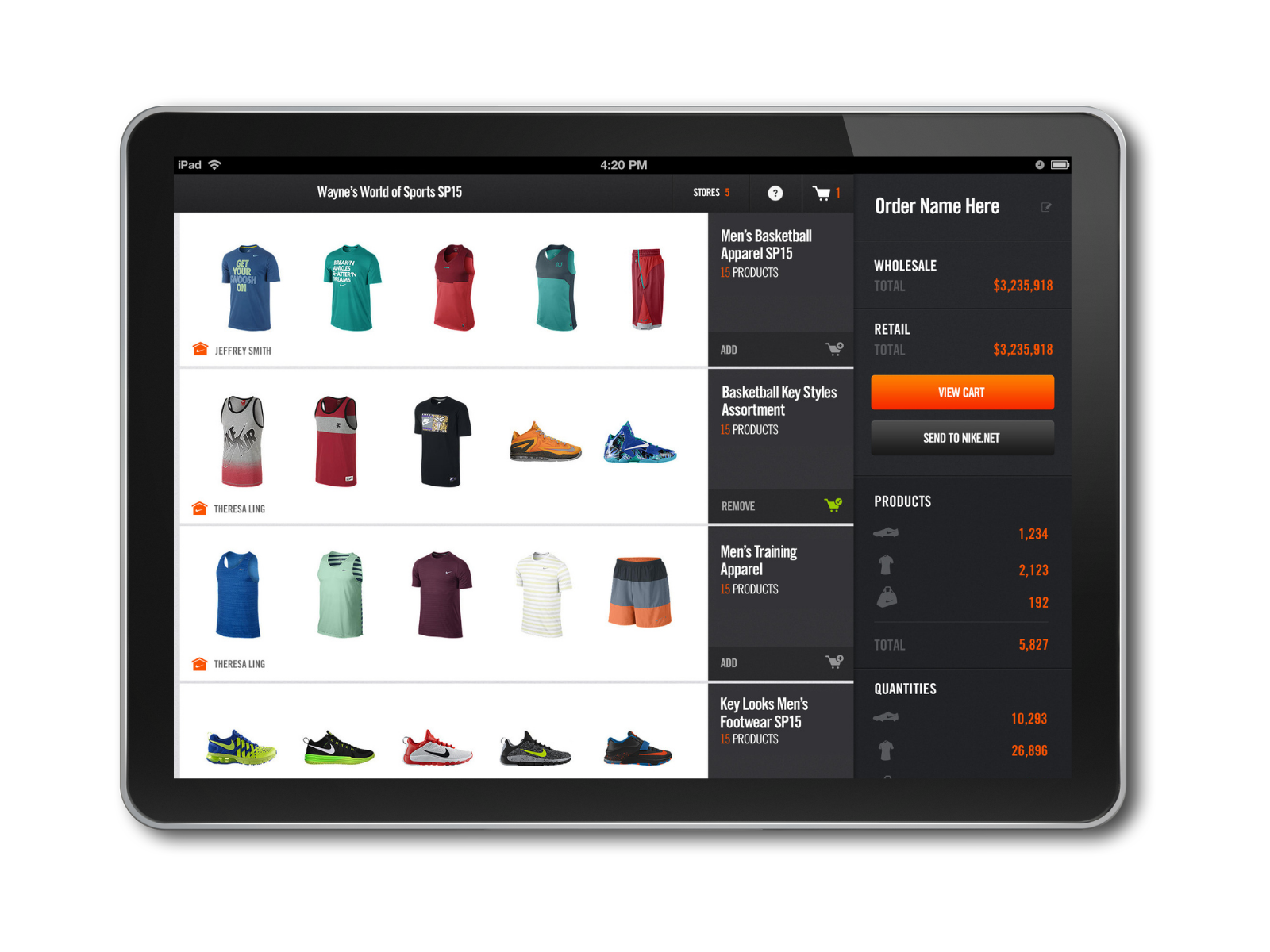
I designed and led the launch of a B2B self-service commerce platform for Nike Business Solutions — a ground-up capital investment serving international retailers and domestic small businesses, with complex purchasing and fulfillment capabilities.
The project was struggling when I joined: product and engineering partners were frustrated with pace and quality.
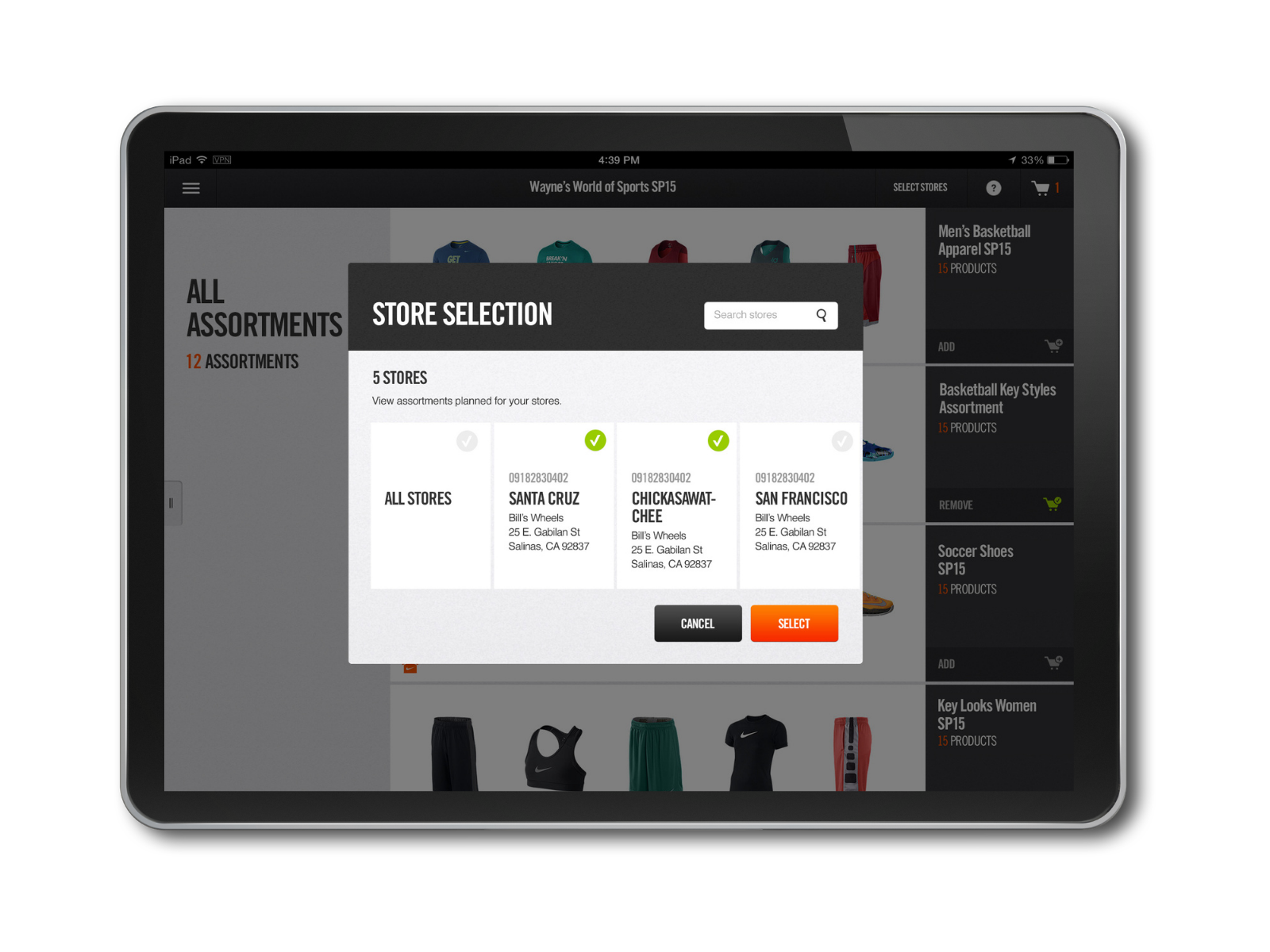
My biggest structural change was compressing review sessions from 20+ people meeting for two hours on alternating weeks to smaller, more frequent working sessions — which increased alignment and accountability and accelerated delivery.
With that new pace and credibility, I negotiated for ethnographic research into how small businesses actually order Nike product, anchoring the team in real user behavior rather than assumption.
Mitigate churn to competitors with new app

Vice President of User Experience
I led the launch of an end-to-end photo-editing application on Shutterstock.com — giving small businesses and professionals (like teachers) without design skills or tools an alternative to switching to Canva.
I also ran ethnographic research with small businesses — insight that anchored
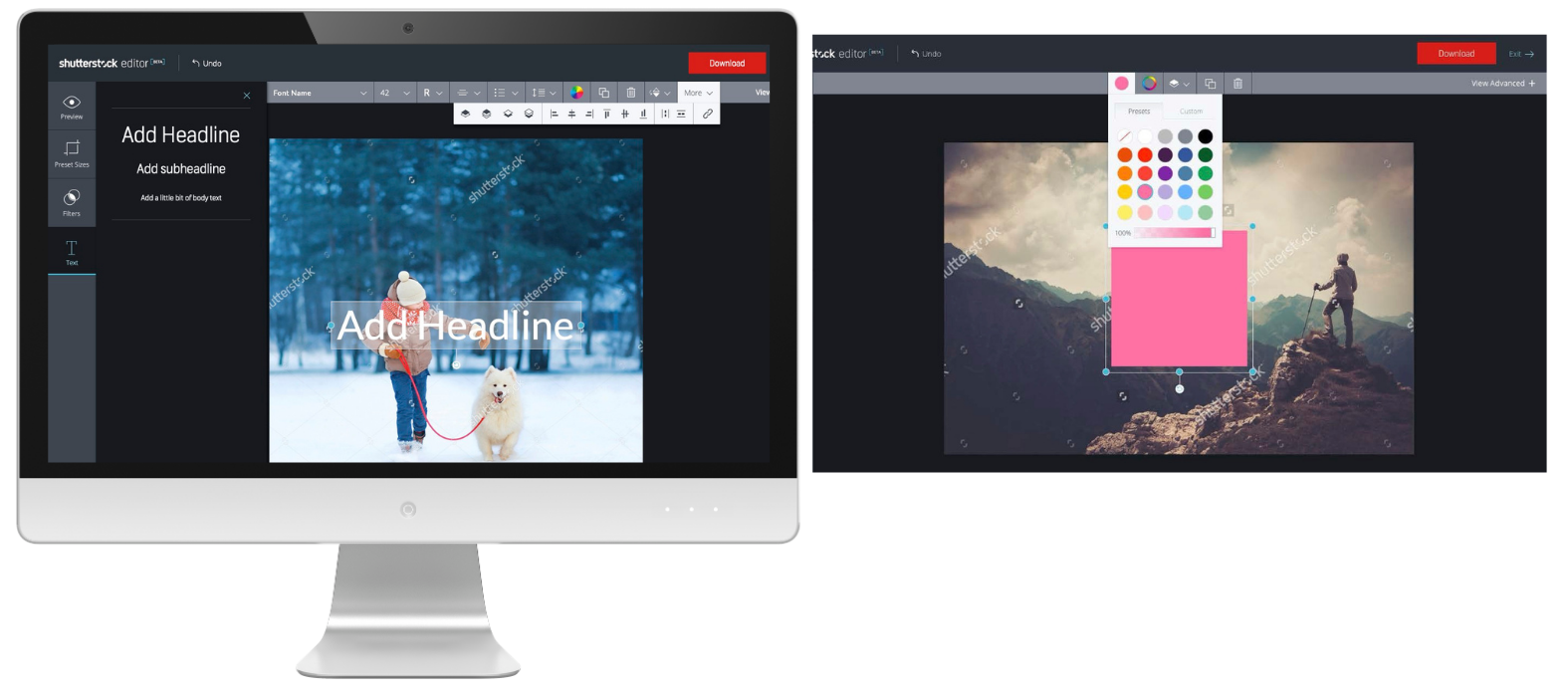
designers and product owners on actual user needs and shifted the team's focus from workflow-based thinking to features and functionality that mattered. It remains one of my favorite examples of designing from evidence rather than speculation.
Empowerment
Respecting my collaborators, their values, and their expertise is the linchpin of how I run working sessions and workshops. Regardless of group size — three people or fifty — I account for collaboration skills and possible resistance going in. Productive, outcome-driven sessions require everyone to participate.
Innovating with clients

Head of UX
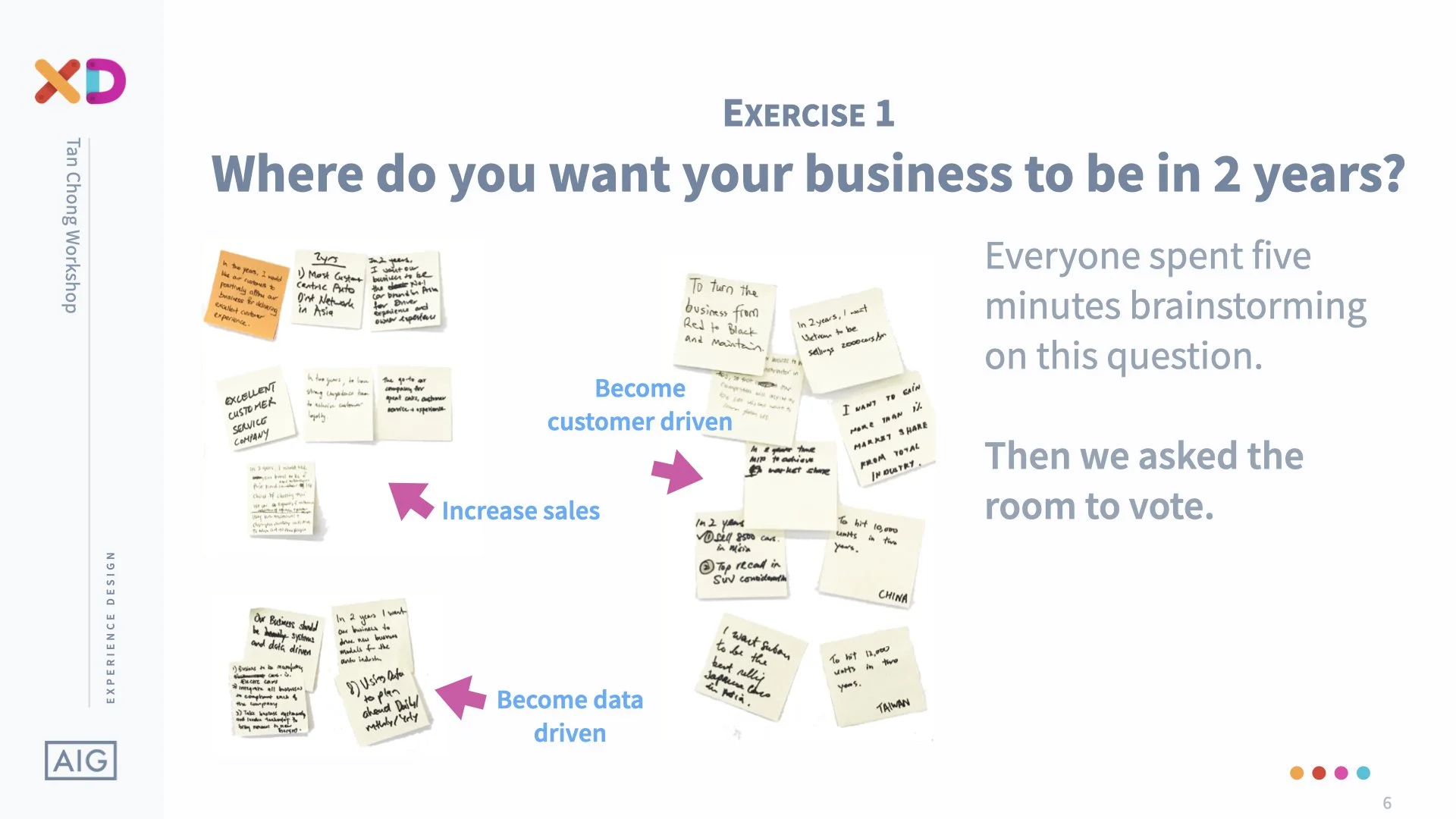
A large AIG client in Southeast Asia wanted to shift how its distributors approached its service offering. I led the effort through AIG's Collaboration Center, introducing 36 leaders to customer-centric thinking in a single afternoon with six facilitators — generating new definitions of success and a clearer sense of the breadth of possible service offerings.
The constraint: English was participants' second or third language. I worked with the client team to ensure every breakout group had at least one strong English speaker — a workaround, but a necessary one given the constraints.
Multi-channel strategy at scale
Service Designer (DesignOps)
Partnering inside a 200-person remote product design organization, I facilitated small, fast sessions that aligned cross-organizational teams around a communication strategy for migrating recently acquired TD Ameritrade clients onto Charles Schwab platforms.
Because of the rapid turnaround, collaborators valued my push for detail — it enabled faster, better-informed decisions in the room and saved time downstream.
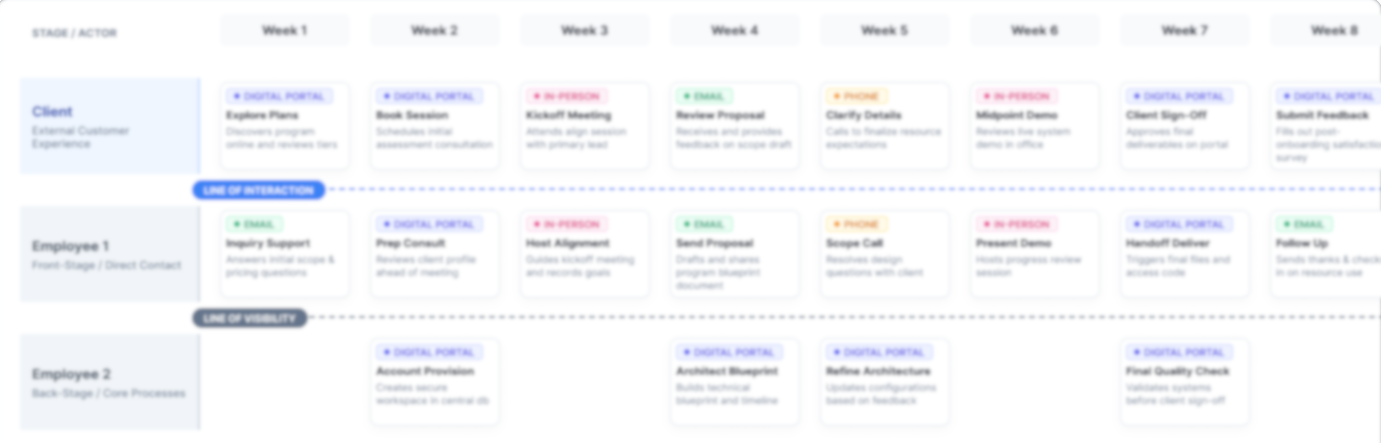
Shaped five roadmaps in three days
Executive Director
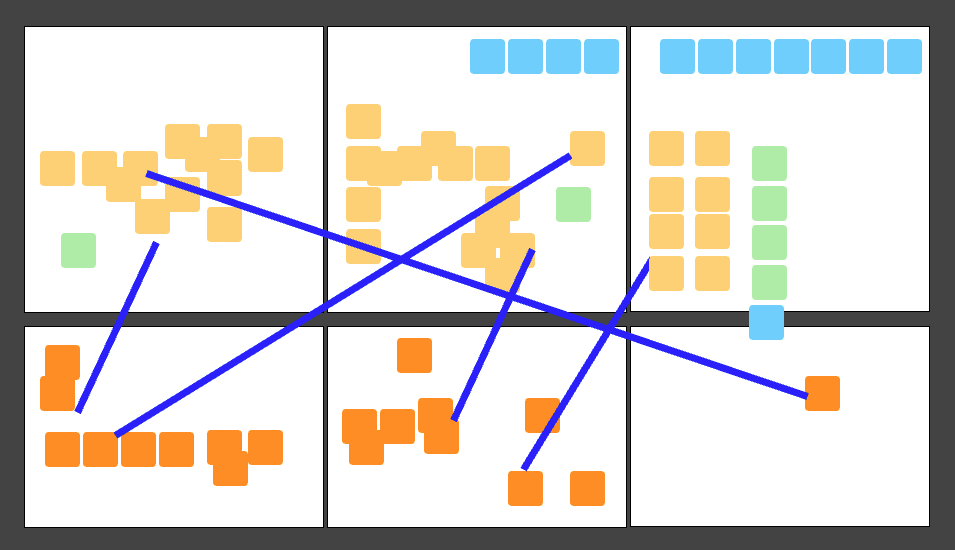
I designed and facilitated a 3-day strategy offsite for 40+ cross-functional leaders, generating 23 actionable product opportunities and directly reshaping five strategic roadmaps.
I introduced paired client-and-employee personas, which let internal teams see their own potential to drive change rather than treating "the client" as an abstraction.
Using service blueprints built with stickies and painter's tape, we moved past obvious needs to underlying challenges — opening the door to a much wider set of priorities than the group started with.
Management
To design client experiences that grow businesses, I build strong, confident teams — people who feel valued and empowered to innovate, and who build genuinely collaborative relationships with partners and stakeholders.
Centralizing a distributed team
Head of UX
I joined AIG's enterprise Experience Design team as part of the company's broader enterprise growth strategy — collaborating across five business units, building a new pattern library (Hinge), and contributing to the innovation center. The team was spread thin.
After candid conversations with my team and line-of-business stakeholders, I restructured the operating model from centralized to distributed: I hired and became the dotted-line leader for a dedicated 4-person design team embedded directly in AIG's VALIC retirement business (1 UX leader, 3 designers, based in Houston), while the enterprise team retained ownership of the pattern library, accessibility standards, and production support as needed. Most project work didn't change day-to-day — what changed was where accountability and speed lived.
Centralized
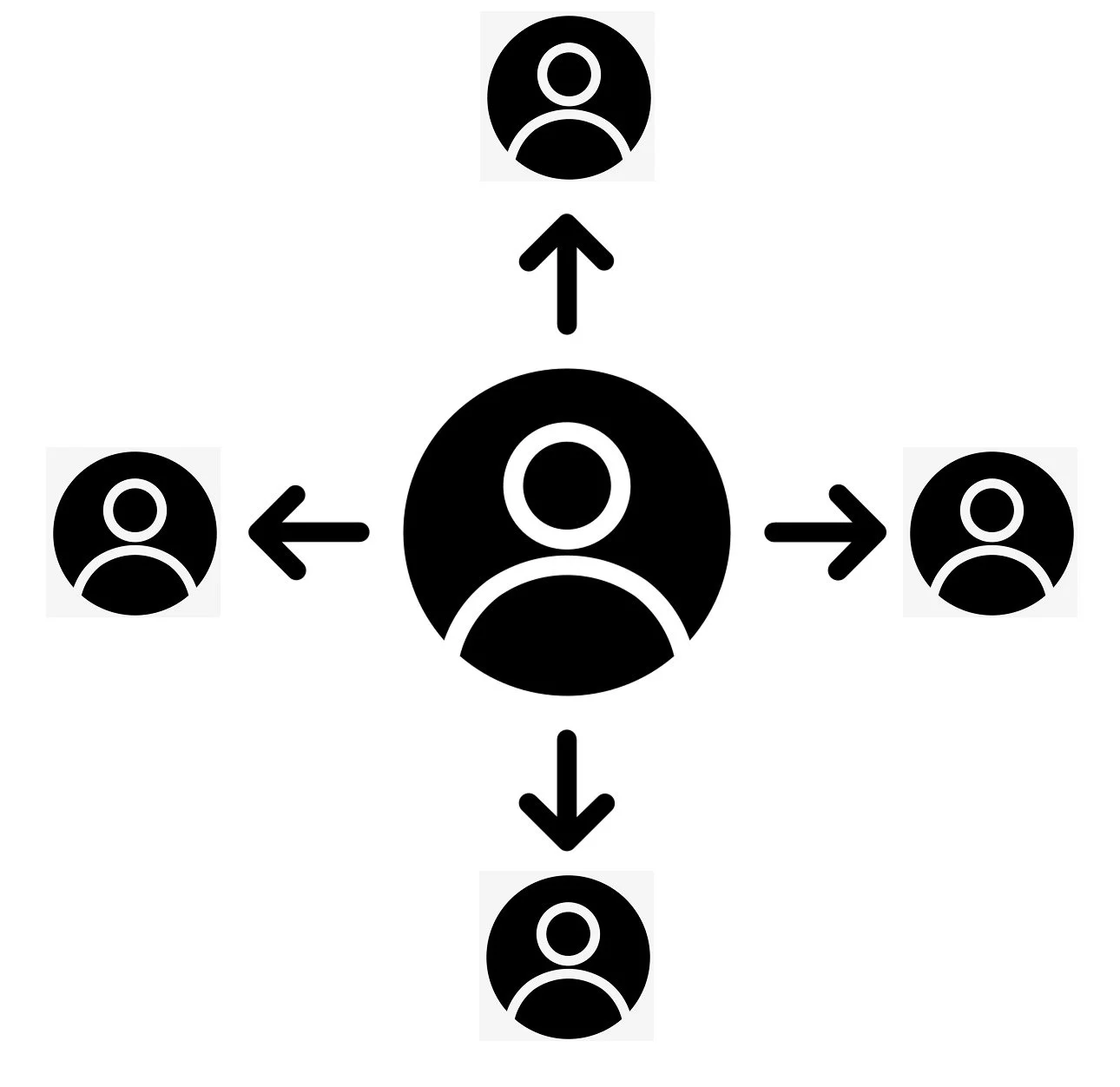
All projects
experience design
user research
pattern library
accessibility standards
Decentralized
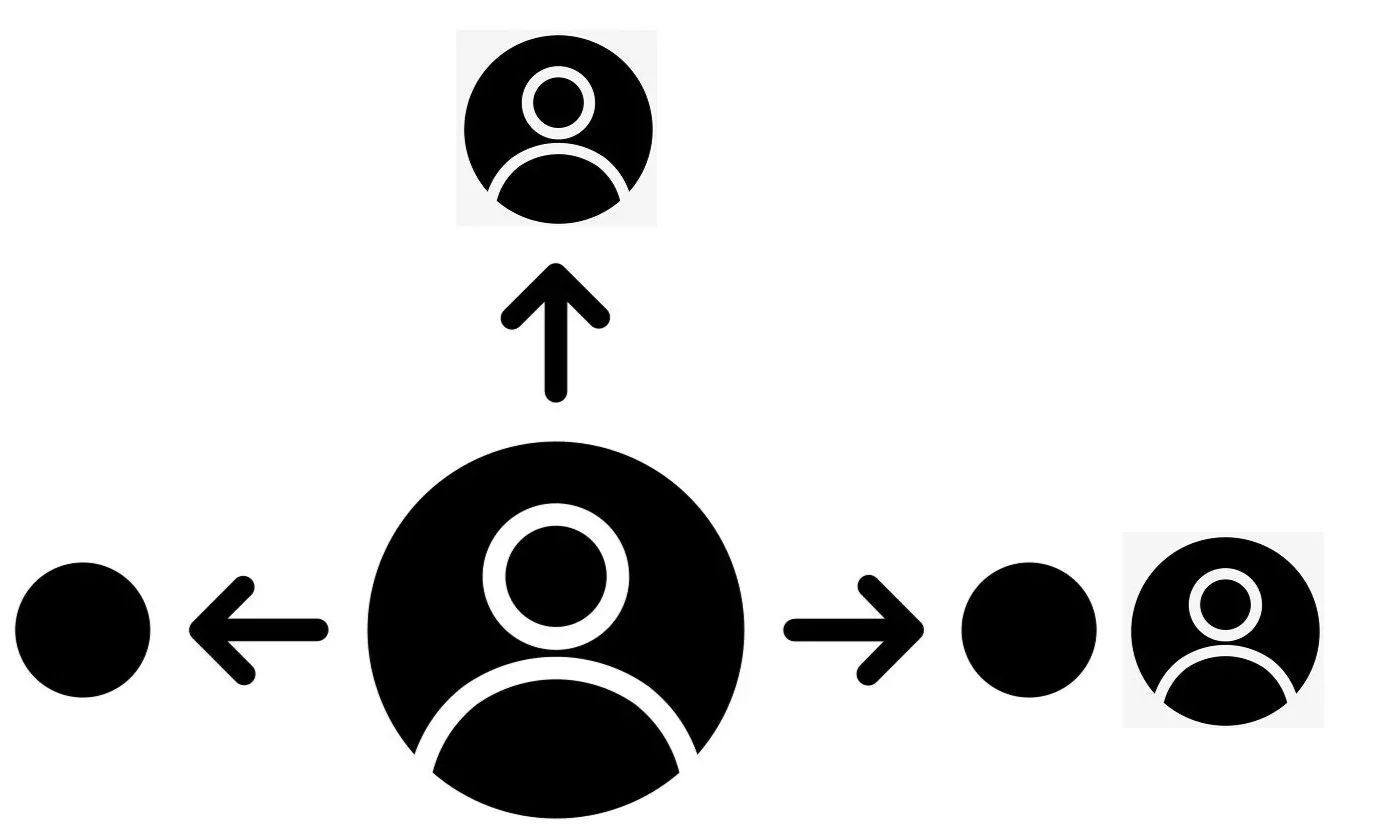
All projects
Pattern library
accessibility standards
As needed
experience design
user research
Highest retention rate

Group Director of User Experience
Clients: Sirius XM, Scholastic, Green Bay Packers, WWE, SPG, Maybelline
Retention in NYC digital agencies is historically low, largely because agencies offer little visible career growth. Having lived that problem myself, I knew I'd lose people fast if I didn't do something different — and Code & Theory's steep learning curve meant I couldn't afford the churn, in either budget or delivery risk.
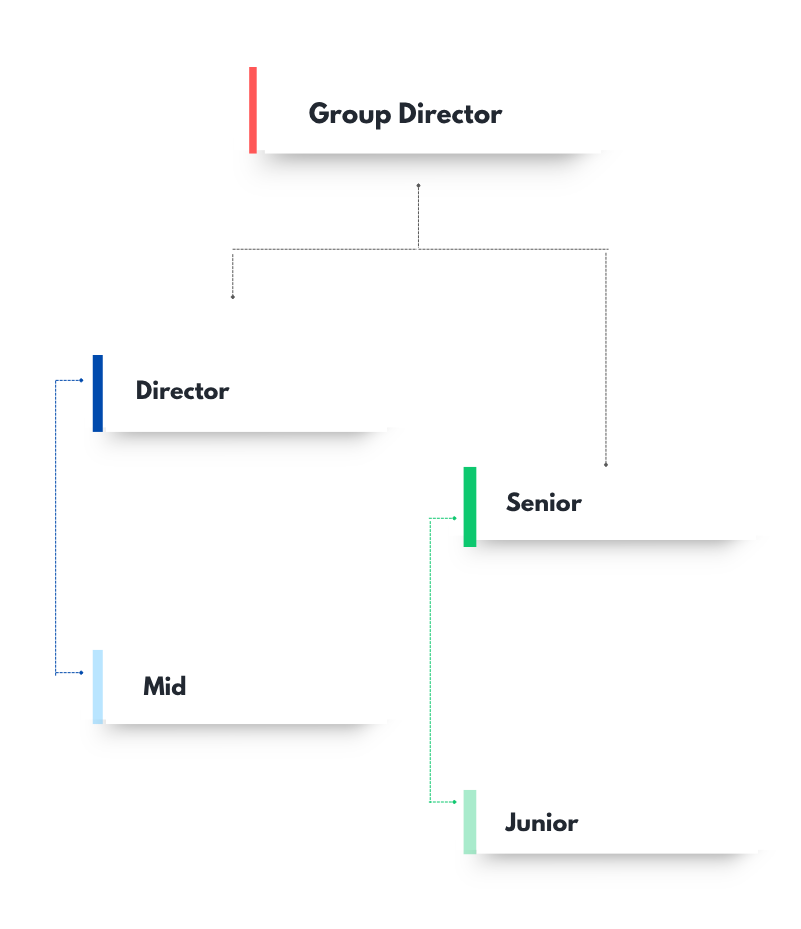
I built growth explicitly into the team structure, including a skip-level reporting model: junior team members got higher-touch support in craft, communication, and leadership, while mid-level designers took on direct reports earlier than typical — accelerating their path into leadership. The approach became a recruiting differentiator, helped me scale the practice from 5 to 23 designers, and produced the organization's highest retention rate alongside a 90% product launch rate as executive sponsor for cross-functional teams.
The thinking traces back to organizational psychologist Elliott Jaques, who argued that a manager only one level above is most likely to feel threatened by that report's talent — skip-level structures remove that dynamic.