JH Jody
Hankinson
Let's talk outcomes

{{ heroKicker }}

Design drives revenue.

I help companies connect design to revenue by establishing a hypothesis and quickly iterating with my collaborators. I have 15+ years of experience with design agencies, corporations, and start-ups, specializing in complex systems.

Together we can grow businesses.

Jody Hankinson
400%
Employee efficiency
+30%
Lift of qualified leads
2
Regulated industries: insurance & banking
4
Types of clients
B2B, B2B2B, B2C, B2E

INSURANCE   BANKING   RETAIL

Designing for trust at scale

Measurable outcomes for regulated industries and controlled experiences.

8Case
studies
Read the case studies
Client logos: Wells Fargo, Charles Schwab, AIG, Quartz, and Shutterstock.
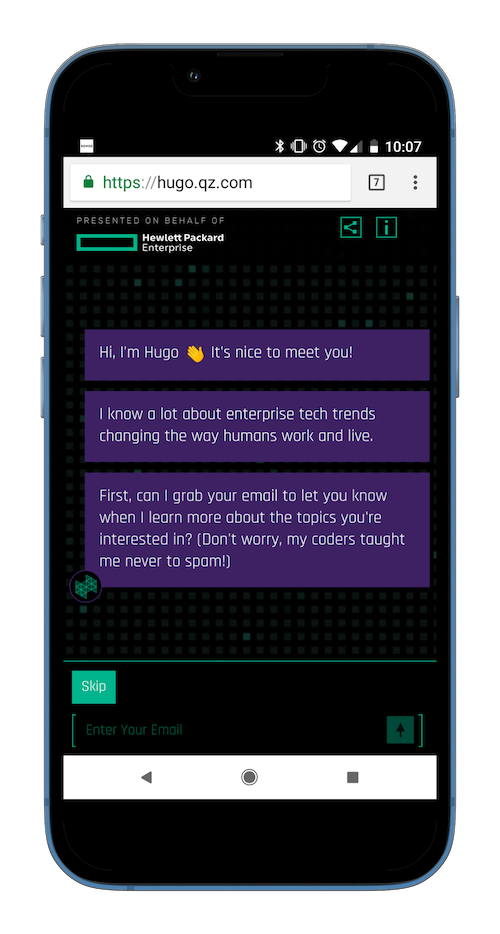
Promotional tile with the bot's name, Hugo, and the bot's landing screen

ARTIFICIAL INTELLIGENCE   INFORMATION TECHNOLOGY

AI for lead generation

+30% Growth of
qualified leads

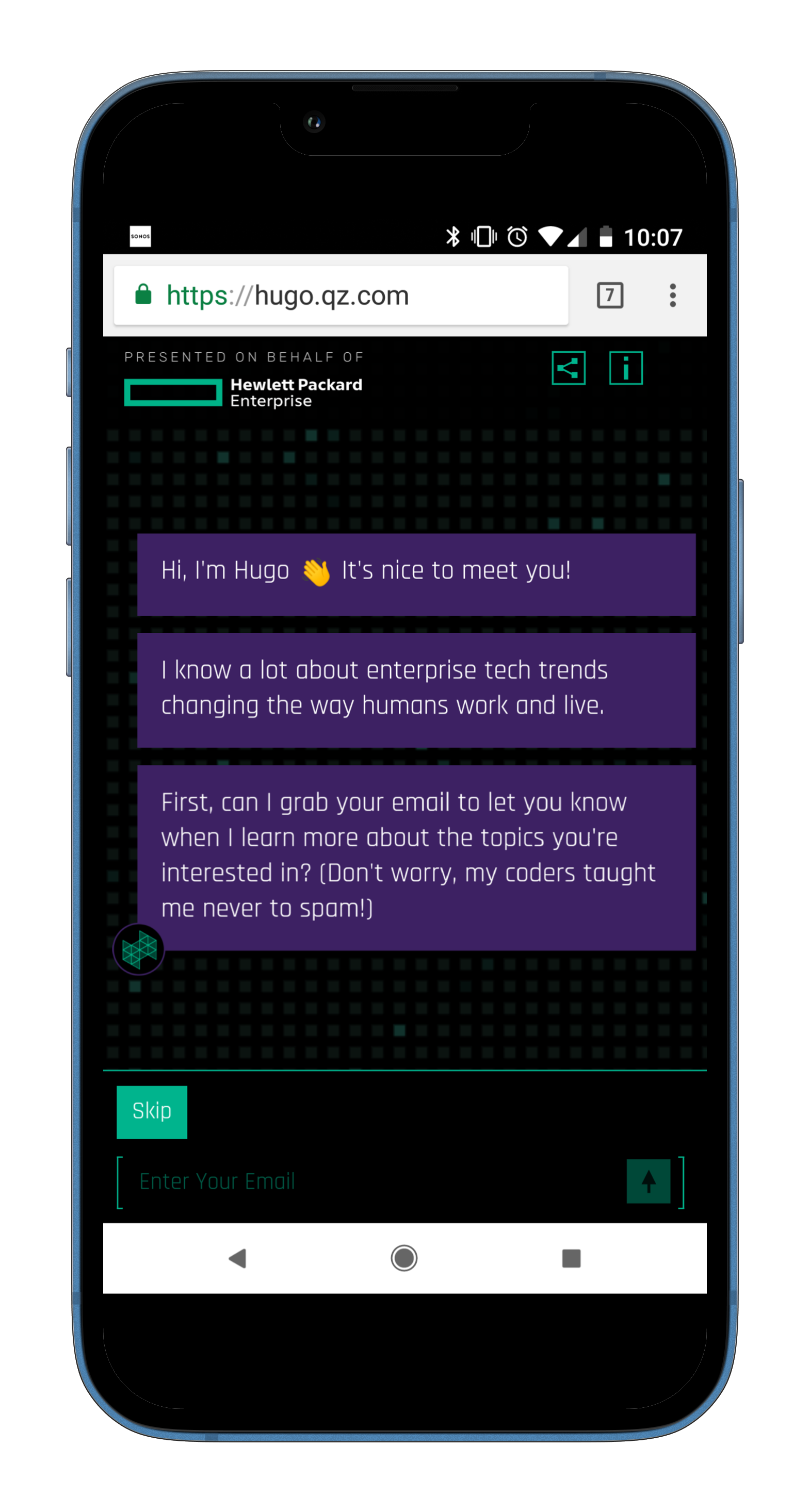
Hugo, a conversational and generative chatbot, was designed for technology leaders. I created the conversational design and user experience and conducted the user research.

Read the case study

Insurance   Platform

Two-sided insurance platform

2 Audiences,
one platform

I led a 12-person design team for AIG's highest-revenue division, VALIC Retirement, and drove a change-management initiative across the plan-administrator platform and the employee retirement portal.

Read the case study
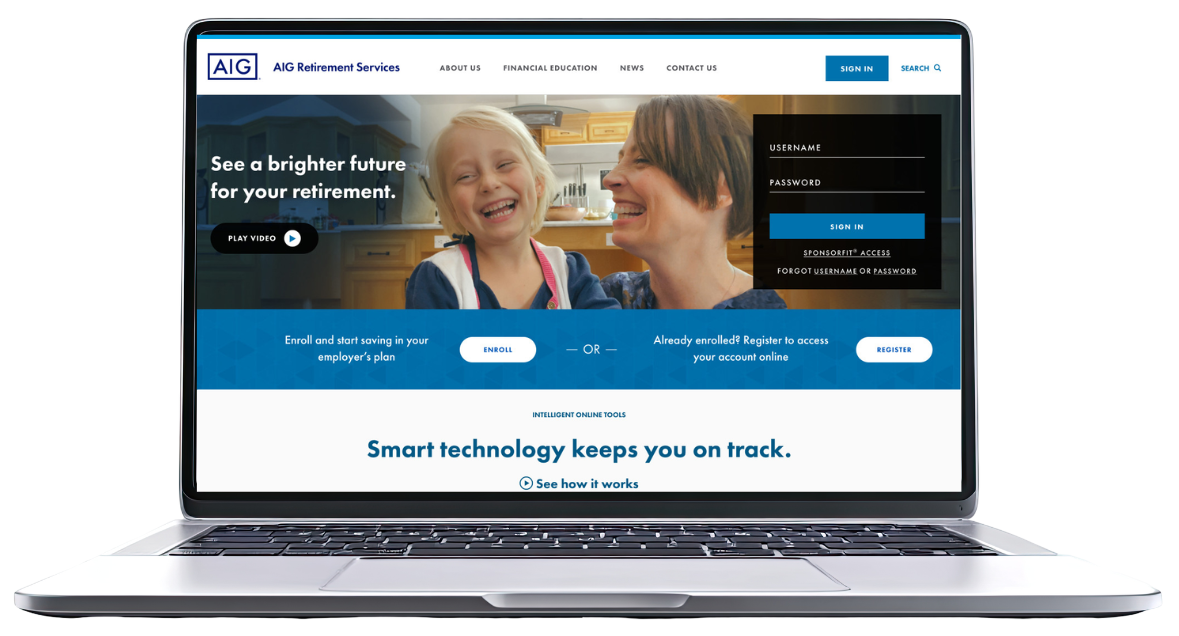
Laptop displaying the homepage of AIG Retirement Services with a smiling couple and login fields.
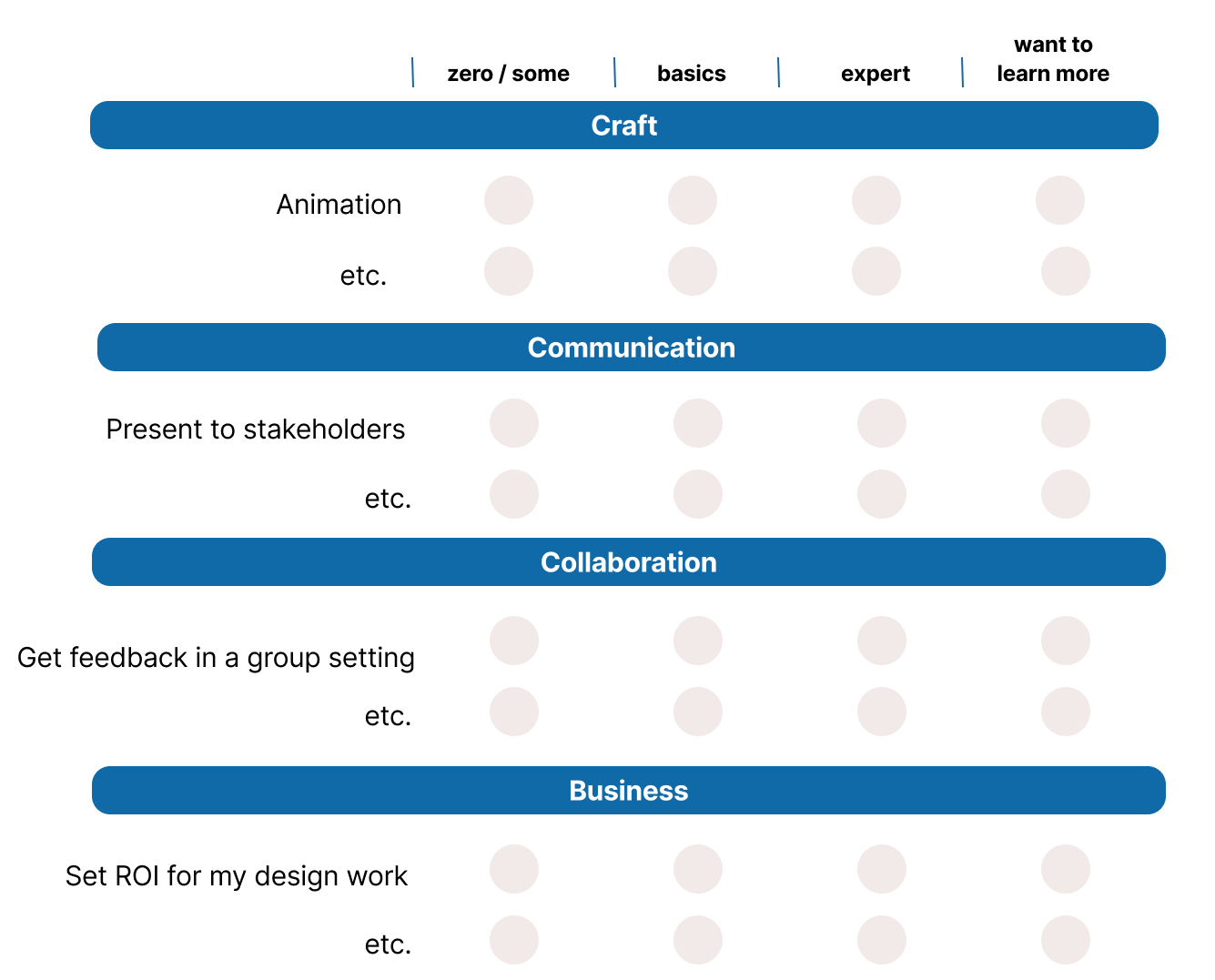
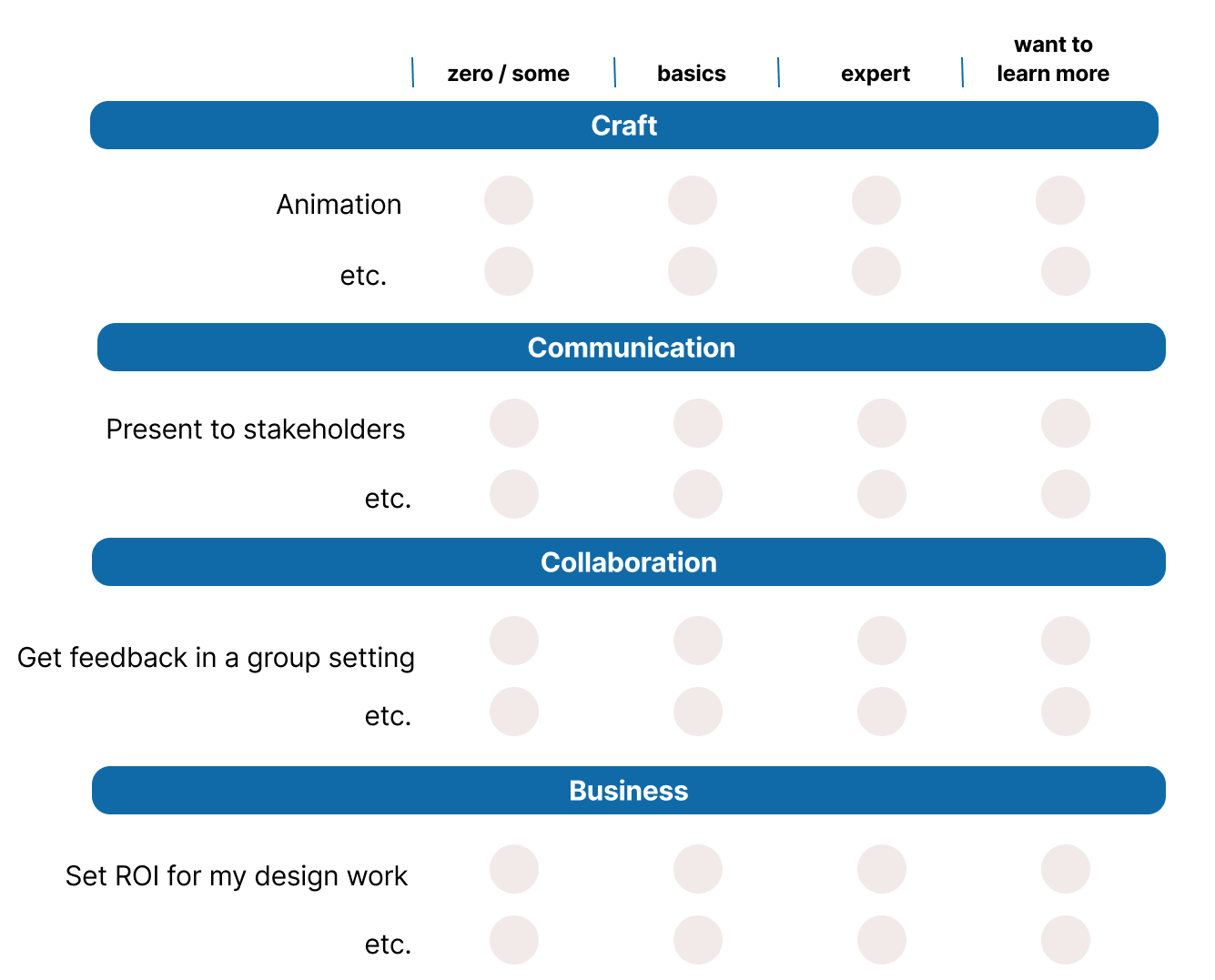
A form for self assessment, broken into four sections: craft, communication, collaboration, and business, with four rankings across the top: limited, basics, expert, want to learn more.

Leadership.   Context

Growing careers when I can't promote

4 Axis for
self-assessment

No headcount and no new titles - using a growth plan with trackable career goals

Read more about my approach

Context

If we met at a party …

We are more than our resumes.

Learn about who I am
A collage of six images including a bridge, a baseball game, a street sign reading 'Boerum Pl,' a modern glass sculpture, a stack of books with a skull decoration, and a person knitting.

Designing for trust, at scale.

Proven UX leadership across banking, insurance, and AI — where the stakes (and the regulations) are real.

01
Creating AI that ships & generates value
02
Designing platforms that grow businesses
03
Facilitating for alignment & growth
04
Building high-performing teams
Section 01

Creating AI that ships & generates value

Increased lead generation by 30%

Quartz Media / Client: Hewlett Packard Enterprise
Director of AI UX · Individual contributor

On a generative AI project for Hewlett Packard Enterprise's corporate site, I led the chatbot's experience and conversational design, and built the taxonomy structure to support the NLP framework. I also concepted the analytics portal used to track the bot's performance and manage hallucination risk.

The bot, named Hugo, generated a 30% increase in qualified leads over traditional gated content, while cutting cost-per-lead by a third. It became HPE's most efficient early-funnel channel.

For details, read my case study
Mobile phone screen displaying a chatbot named Hugo with options for security and robotics.
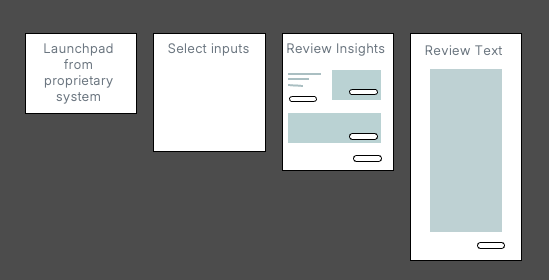
Flowchart with four steps: 1. Launchpad from proprietary system, 2. Select inputs, 3. Review insights, 4. Review text.

Increased efficiency by 400%

Wells Fargo
Executive Director - Tiger Team of 1

I pioneered an iterative AI tool for a highly regulated employee decision-making flow, establishing the UX framework that took a task from 40+ hours to approximately four. This initiative was within a broader wholesale digital and innovation mandate.

Beyond the time savings, the work increased throughput and expanded capacity at a critical operational stage — the kind of measurable business impact I look for in every project.

Section 02

Designing platforms that grow businesses

Generated over $700M in sales volume during beta

R/GA
Associate Creative Director - team of four

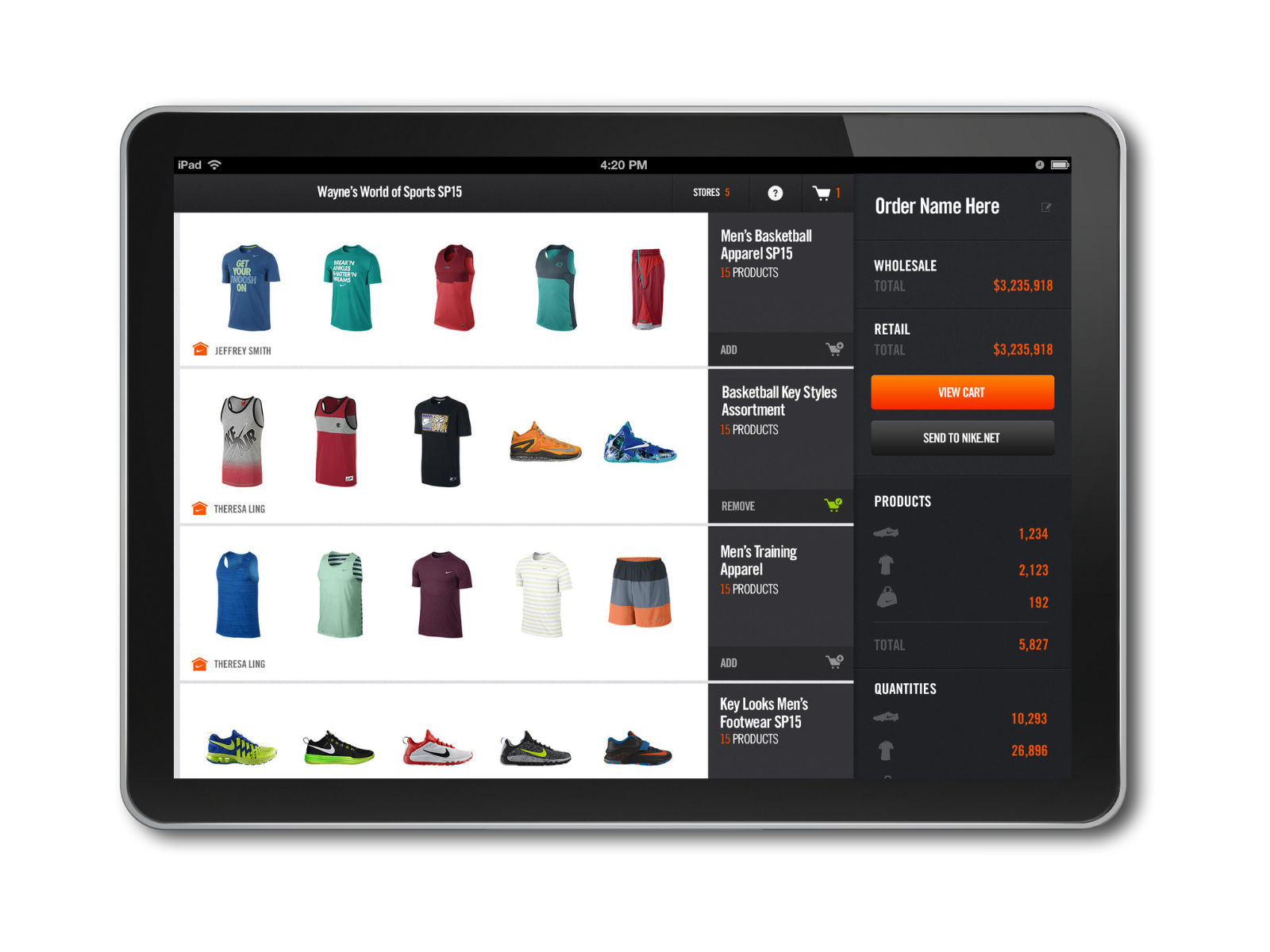
I designed and led the launch of a B2B self-service commerce platform for Nike Business Solutions — a ground-up capital investment serving international retailers and domestic small businesses, with complex purchasing and fulfillment capabilities.

When I joined, the product and engineering partners were frustrated with pace and quality. My biggest change was a new approach to review sessions. They were 20+ people, meeting for two hours on alternating weeks. I made them smaller and more frequent, which increased alignment, accountability, and delivery speed. With new credibility, I negotiated for ethnographic research into how small businesses order products.

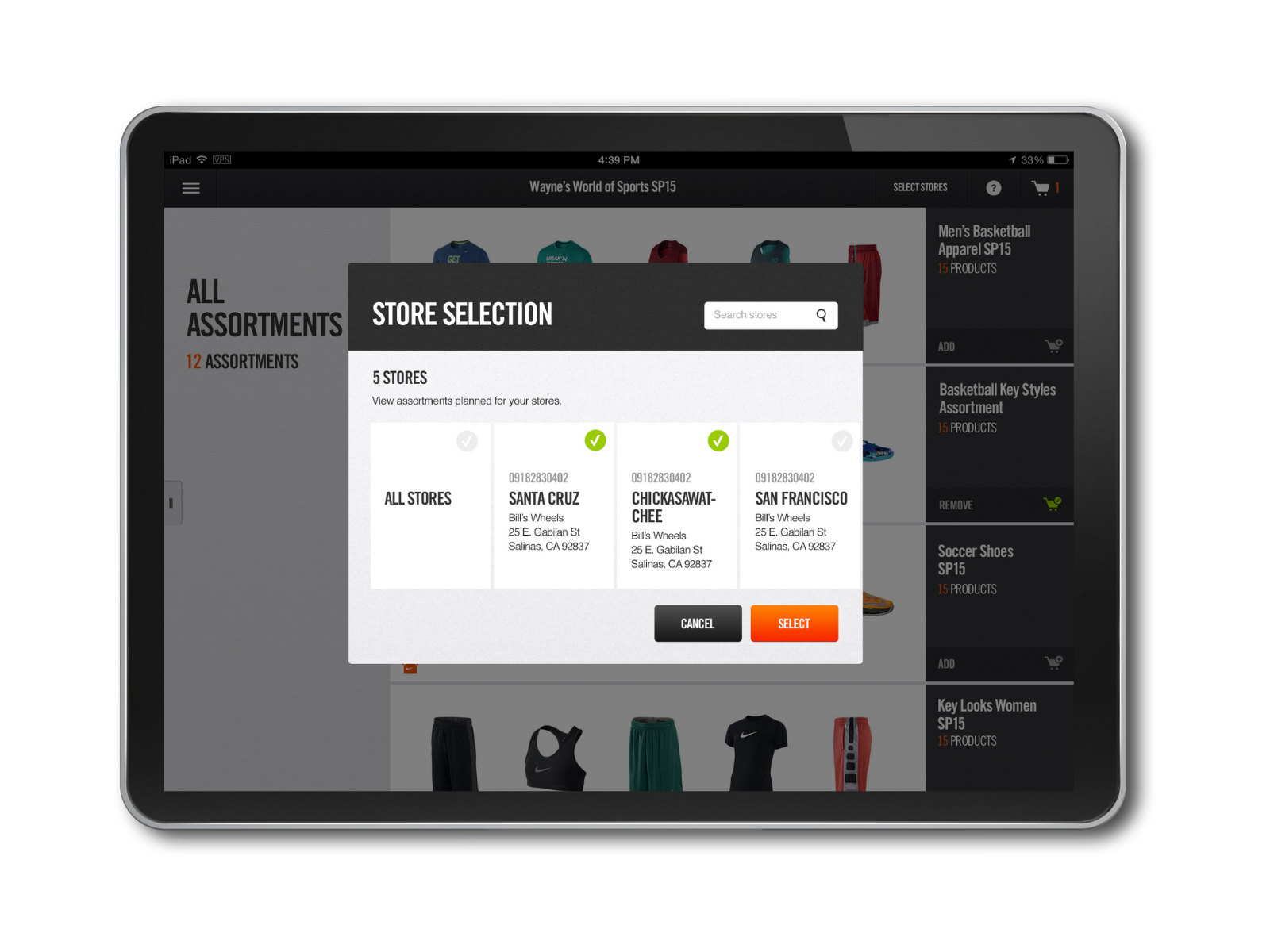
Tablet screen showing sports apparel and footwear online shopping cart. A tablet screen displaying a sports apparel online store with a store selection popup for five stores.
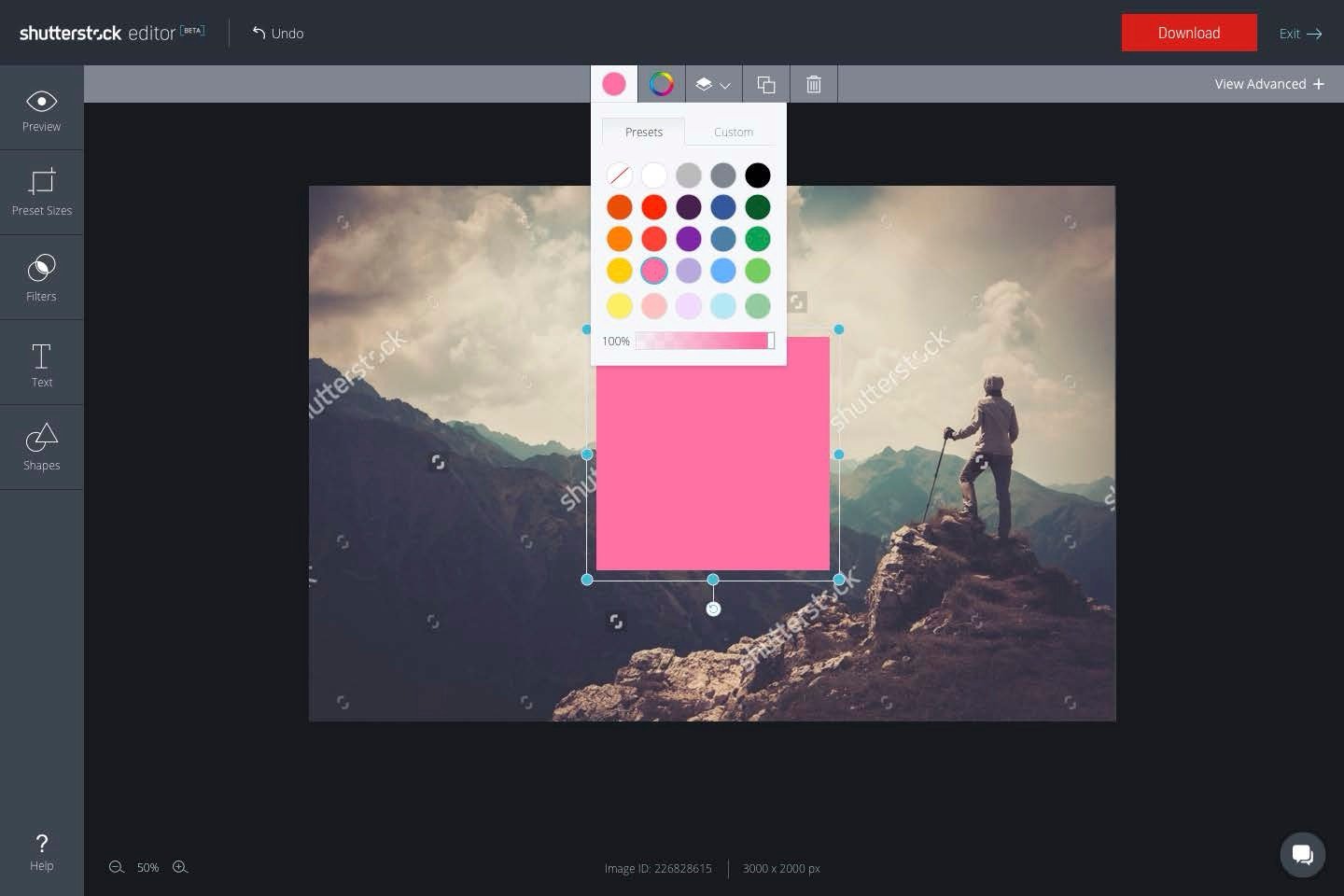
Two computer screens displaying graphic design software with photo editing tools.

Mitigate churn to competitors with new app

Shutterstock
Vice President of UX - project team of four

I led the launch of an end-to-end photo-editing application on Shutterstock.com — giving small businesses and professionals (like teachers) without design skills or tools an alternative to switching to Canva.

I also ran ethnographic research with small businesses — insight that anchored designers and product owners on actual user needs and shifted the team's focus from workflow-based thinking to features and functionality that mattered. It remains one of my favorite examples of designing from evidence rather than speculation.

Section 03

Facilitating for alignment & growth

Innovating with clients

AIG
Head of UX - Project team of six

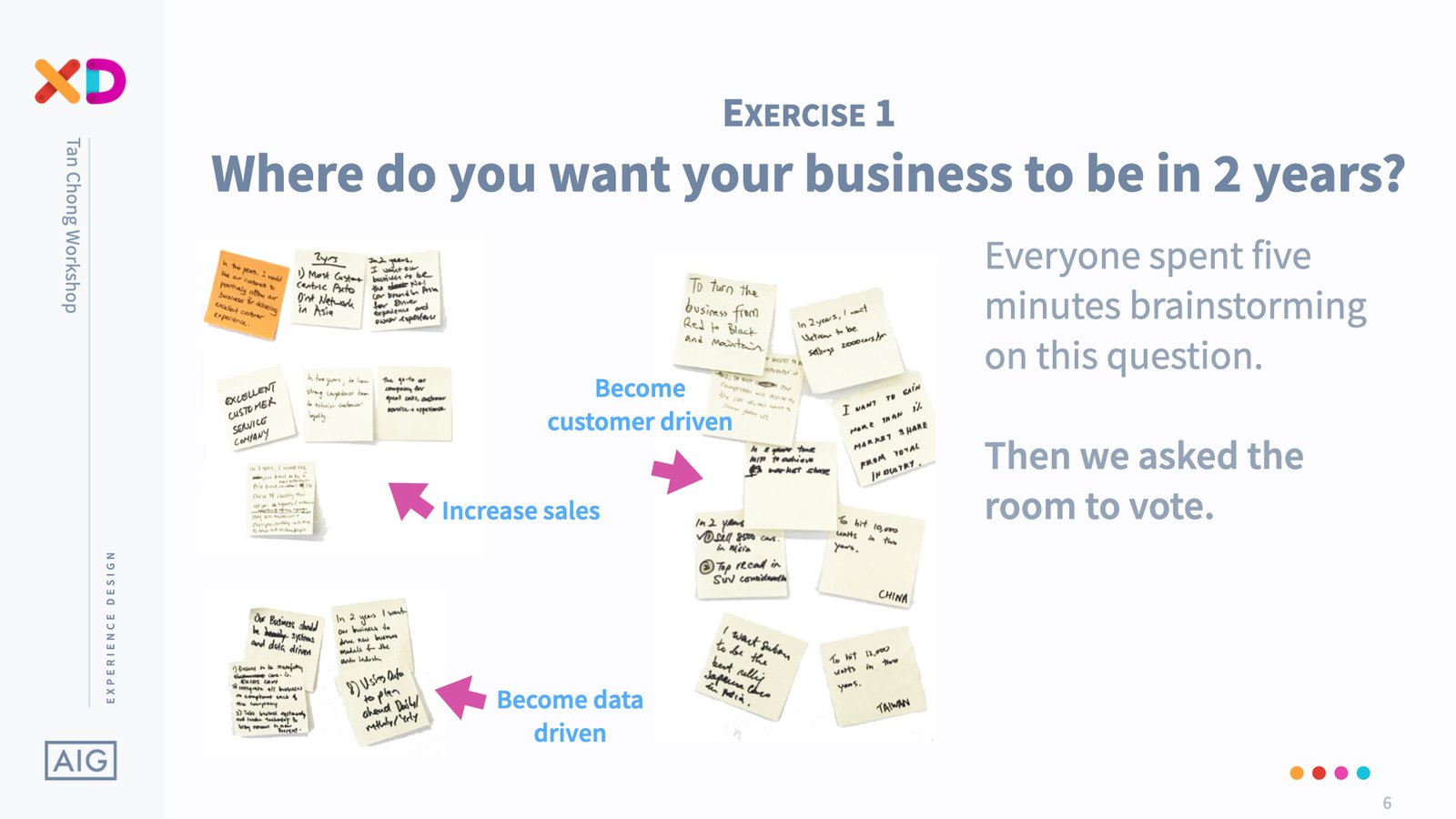
A large AIG client in Southeast Asia wanted to shift how its distributors approached its service offering. I led the effort through AIG's Collaboration Center, introducing 36 leaders to customer-centric thinking in a single afternoon with six facilitators — generating new definitions of success and a clearer sense of the breadth of possible service offerings.

The constraint: English was participants' second or third language. I worked with the client team to ensure every breakout group had at least one strong English speaker — a workaround, but a necessary one given the constraints.

Slide titled 'Exercise 1: Where do you want your business to be in 2 years?' with handwritten notes and sticky notes.
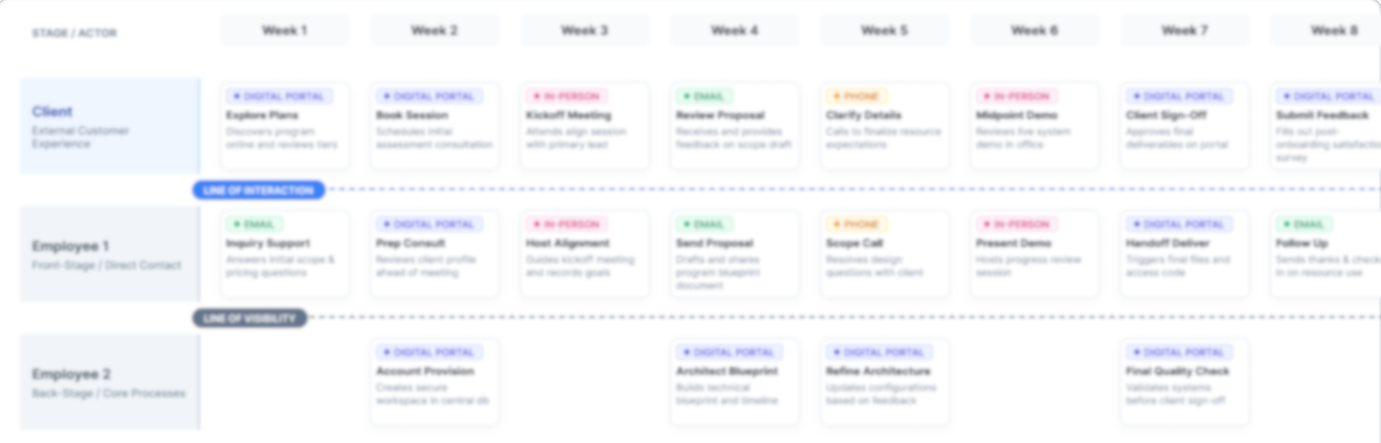
Service blueprint illustration listing tasks for a client, employee 1, and employee 2 in a detailed schedule.

Multi-channel strategy at scale

Charles Schwab
Service Design and Design Operations - Individual Contributor
I facilitated small, fast sessions that aligned cross-organizational teams around a five-channel communication strategy. It aligned teams to onboard recently acquired TD Ameritrade clients to Charles Schwab platforms.
Because of the rapid turnaround, collaborators valued my push for detail — it enabled faster, better-informed decisions in the room and saved time downstream.

Shaped five roadmaps in three days

Wells Fargo
Executive Director - Project team of three

I designed and facilitated a 3-day strategy offsite for 40+ cross-functional leaders, generating 23 actionable product opportunities and directly reshaping five strategic roadmaps.

I introduced paired client-and-employee personas, which let internal teams see their own potential to drive change rather than treating "the client" as an abstraction.

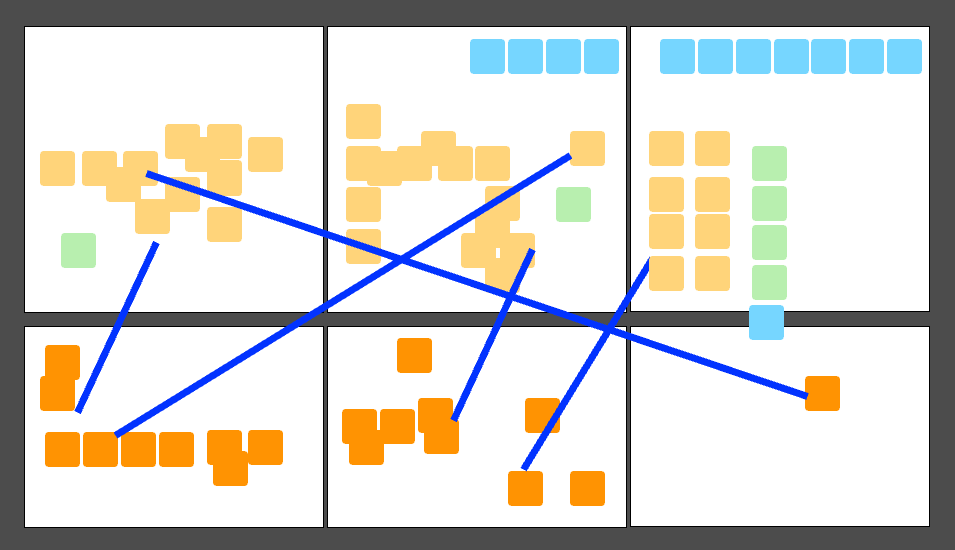
Using service blueprints built with stickies and painter's tape, we moved past obvious needs to underlying challenges — opening the door to a much wider set of priorities than the group started with.

A service blueprint illustration for a Wells Fargo project.
Section 04

Building high-performing teams

My approach to growing careers when I can't promote.

Centralizing a distributed team

AIG
Head of UX - team of seven

I joined AIG's enterprise Experience Design team as part of the company's broader enterprise growth strategy — collaborating across five business units, building a new pattern library (Hinge), and contributing to the innovation center. The team was spread thin.

After candid conversations with my team and line-of-business stakeholders, I restructured the operating model from centralized to distributed. I hired and became the dotted-line leader for a dedicated 4-person design team embedded directly in AIG's VALIC retirement business (1 UX leader, 3 designers, based in Houston).

The enterprise team retained ownership of the pattern library, accessibility standards, and production support as needed. Most project work didn't change day-to-day. The biggest difference became who is accountable for quality and speed.

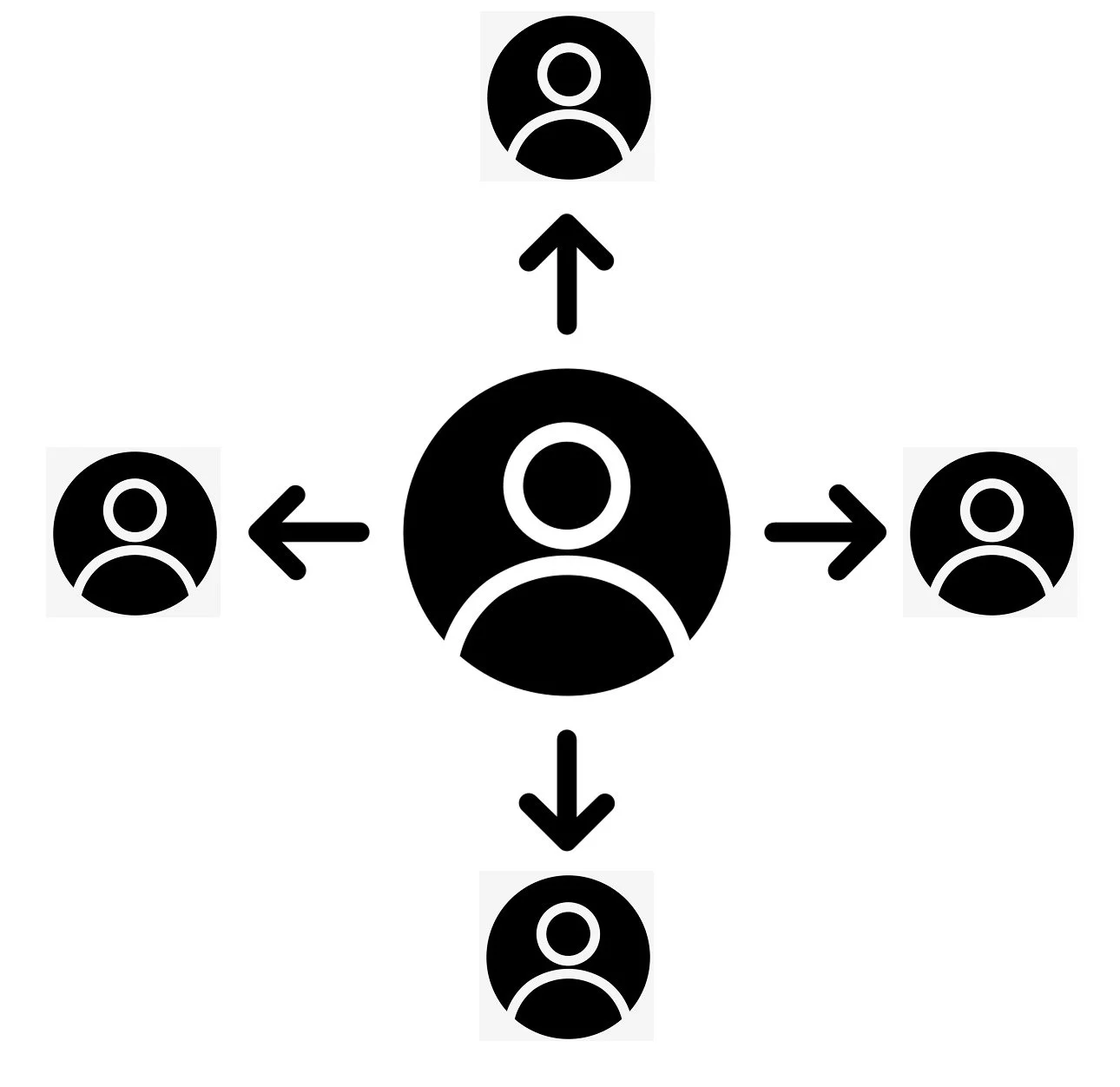
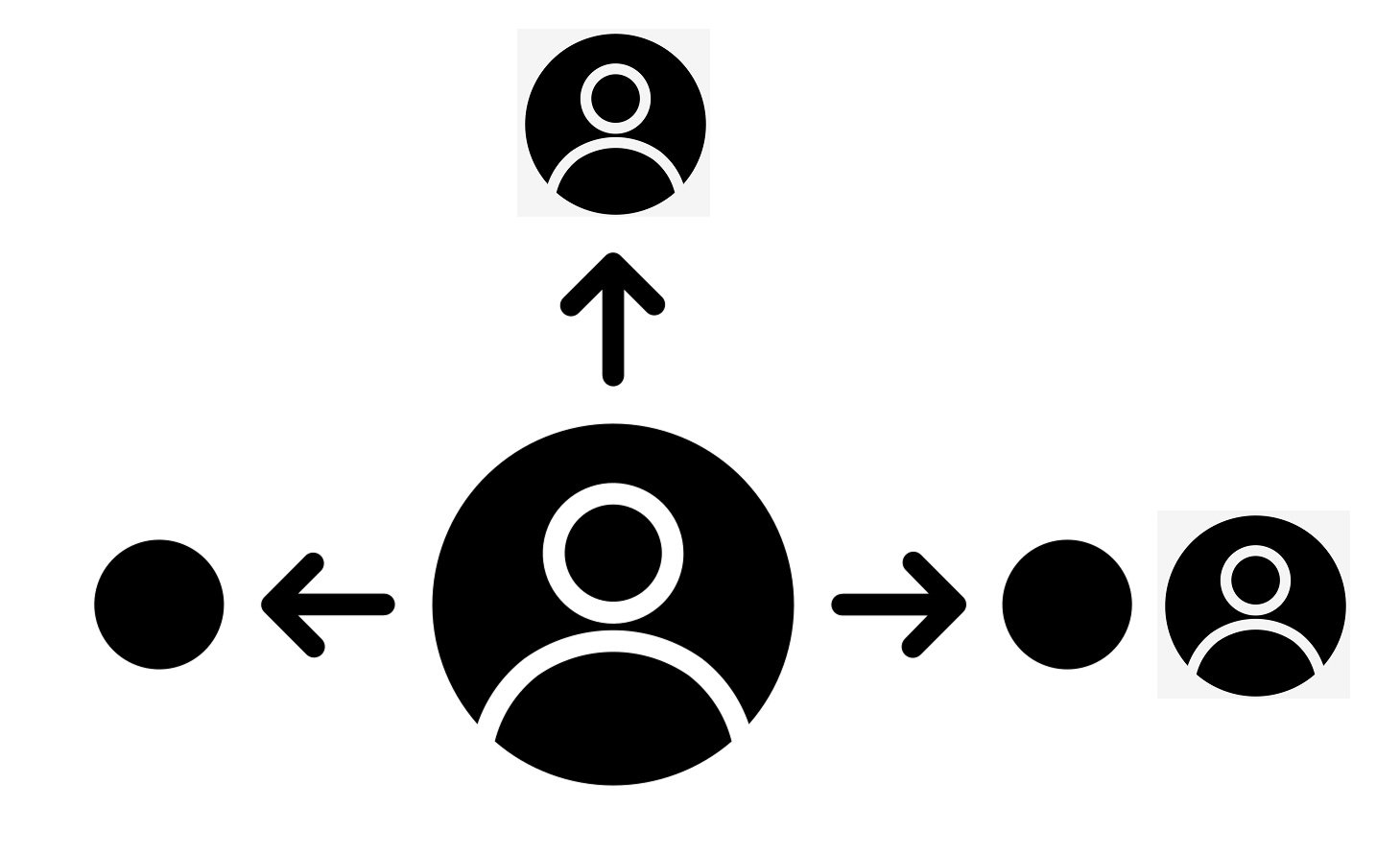
Centralized A diagram showing a central person icon with arrows pointing to four other person icons.
  • All projects — experience design, user research, pattern library, accessibility standards
Decentralized Flowchart with a central black circle connected to three smaller circles with arrows pointing to person icons.
  • All projects — pattern library, accessibility standards
  • As needed — experience design, user research
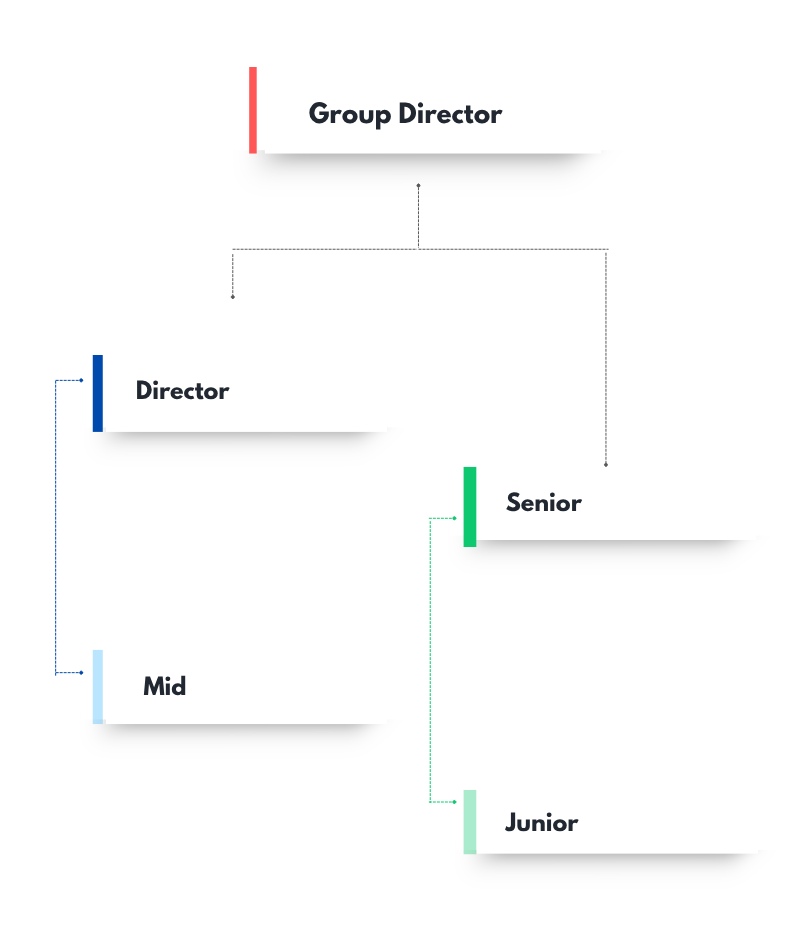
Organizational chart showing a skip-level hierarchy

Highest retention rate

Code & Theory
Group Director of UX - Team of 23

Clients: Sirius XM, Scholastic, Green Bay Packers, WWE, SPG, Maybelline

Retention rates in NYC digital agencies are historically low because of limited visible career growth. Having experienced this challenge firsthand, I recognized the need for a different approach. Code & Theory’s steep learning curve made employee turnover unsustainable financially and in terms of delivery risk.
I integrated growth opportunities into the team structure by implementing a skip-level reporting model. Junior team members received focused support in craft, communication, and leadership. Mid-level designers assumed direct reports earlier than usual, accelerating their leadership development. This approach differentiated our recruiting, enabled me to scale the team from 5 to 23 designers, and resulted in the organization’s highest retention rate and a 90% product launch rate as executive sponsor for cross-functional teams.
My approach is informed by organizational psychologist Elliott Jaques, who argued that managers only one level above may feel threatened by their direct reports’ talent. Skip-level structures help eliminate this dynamic.

Case study — Conversational AI

30% increase in qualified leads with conversational AI

Impact

  • 30% increase in qualified leads vs. traditional gated content
  • 50% improvement in completion rate (8% → 12%)
  • 33% reduction in cost per lead
    ($180 → $120)
  • 85% data quality rate
    (vs. 60% baseline)

Became HPE's most efficient early-funnel channel. The framework became the foundation for bot deployments across other business units.

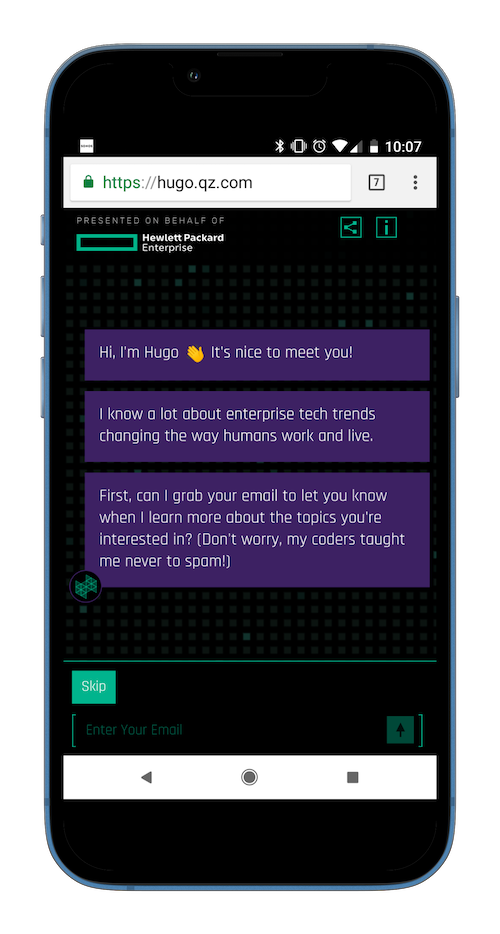
Conversational AI named Hugo provided Hewlett Packard Enterprise a new method of engaging with potential clients.

The bot used natural language to share information about 12 industry topics, such as security, quantum computing, artificial intelligence, etc.

Situation

Hewlett Packard Enterprise's gated content had a fatal flaw: 8% conversion rate and 40% fake data. At $180 per qualified lead, HPE was paying 2.5x the industry benchmark for low-quality leads.

Execution

  • Release 1: Designed content architecture connecting 40+ enterprise topics with intelligent bridging. Mapped 150+ interaction flows. Interviewed 6 decision-makers to establish baseline metrics.
  • Release 2: Redesigned for conversational AI with progressive capture—users consumed 3-4 pieces before sharing basic info, additional data only after continued engagement. This eliminated the "now we're selling" moment that triggered fake data.

Strategic bet

Instead of optimizing forms, I proposed flipping the model: give value first, capture data progressively. Users would share real information in exchange for genuine value rather than to bypass a gate.

Roadmap & stakeholder alignment

  • Release 1 (3 months): Scripted bot to validate that users would engage conversationally
  • Release 2 (6 months): AI chat with progressive lead capture to prove conversion mechanics

User research

I wrote the research plan and interviewed 6 decision-makers to evaluate Hugo’s premise, branding, and interaction design.

Participants overwhelmingly remembered the brand and sponsor. However, the data capture was not effective. I used the feedback to adjust the pacing of lead-generation data capture.

Hugo conversational AI screens

Hugo — conversational AI using NLP — 30% increase in qualified leads

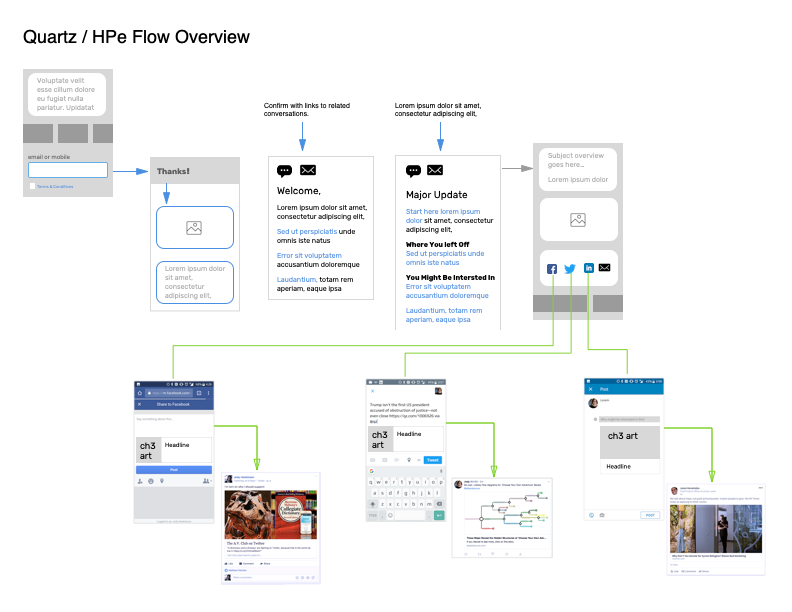
Process flow for conversational AI

Process flow for conversational information architecture

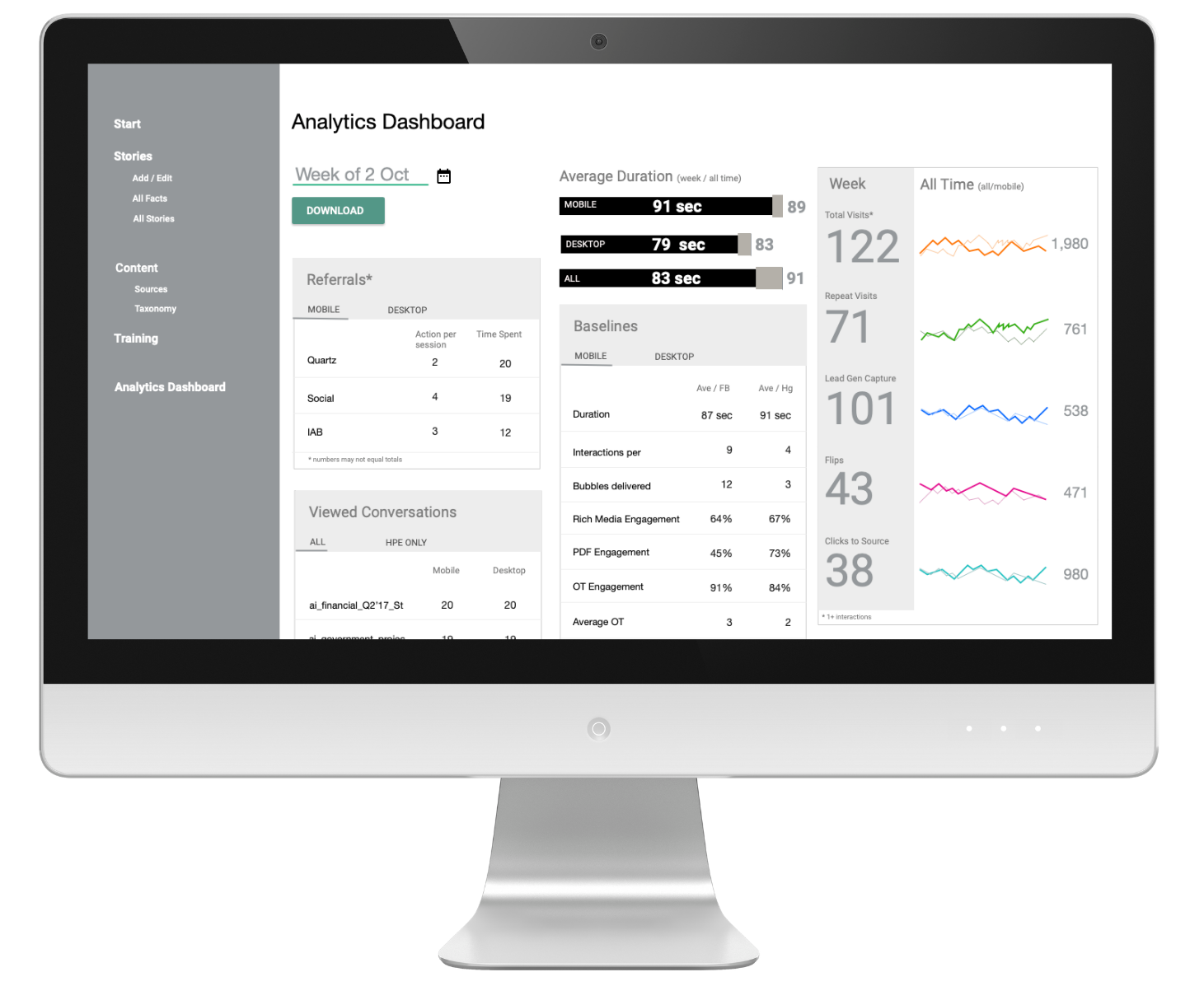
Analytics tracking content interaction

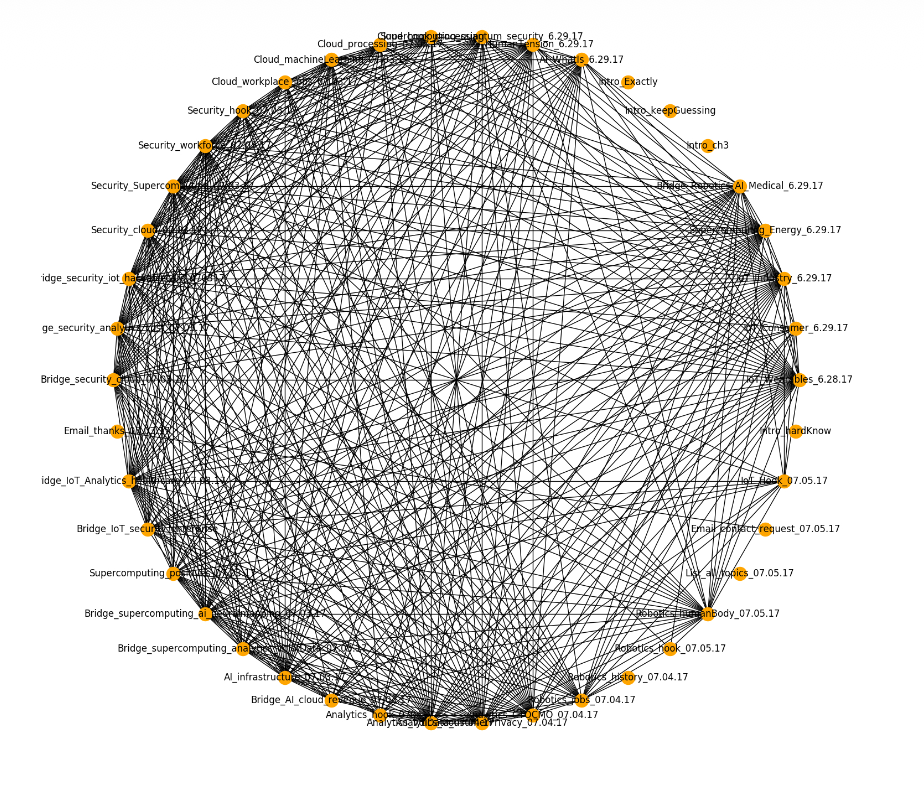
hugo-content-mapping
Computer screen displaying an analytics dashboard with various metrics, graphs, and data tables related to user engagement and website performance.

Wireframe of the administrative platform for internal team to track usage and manage hallucinations

Pushback

  • Sales: Wanted all data upfront. I ran a pilot proving 60% more completions with progressive capture—reframed as "more qualified leads" not "slower capture."
  • Engineering: Wanted sophisticated NLP first. I argued we needed to understand pacing before building complexity. Release 1 would generate training data for Release 2.

Partnerships

  • Product Owners
  • Engineers and QA
  • Client Partners
  • Advertising agency
  • Sales and Marketing

Together we can grow businesses.

Award-winning retirement platform

I led a 12-person design team for AIG's highest-revenue division, VALIC Retirement, driving a comprehensive change management initiative that:

  • Exceeded revenue targets by 30%
  • #1 ranking for digital, by DALBAR, the independent rating company for retirement plan quality
Laptop screen displaying the AIG Retirement Services website homepage.

The situation

AIG VALIC was losing market share to competitors, and its DALBAR industry rating declined, threatening enterprise sales.

Call center analytics and account team feedback revealed that the legacy platform failed to meet core administrator and plan-member needs.

Execution

I established the vision for creating tools that are understandable and learnable. And integrated a design system that inspires confidence in users on highly regulated platforms.

AIG VALIC (now Corebridge) is a retirement plan provider for not-for-profit organizations such as school districts. The platform includes an administrator dashboard and a retirement portal for employees.

SponsorFit — platform for plan administrators

Experience design

I led a foundational restructuring of the platform's functionality and wayfinding. Users were the client's leaders and administrators, often in finance.

  • Executives gained data aggregation needed for financial oversight of employee benefits.
  • Administrators gained foundational functionality, including data import and export, and flexible reporting.
  • All users gained the ability to navigate based on job-to-be-done, such as updates to leaders, managing members, and reconciliation.

Research

I introduced research into this team. Stakeholders thought research would be too time-consuming and put the client relationships at risk. Also, it was "airing dirty laundry." I reframed the language from research to insights and negotiated what questions to ask and who was in the room.

  • Research script: I included both the product and account teams. Language considered insensitive was adjusted.
  • Session — Account leaders joined the sessions.
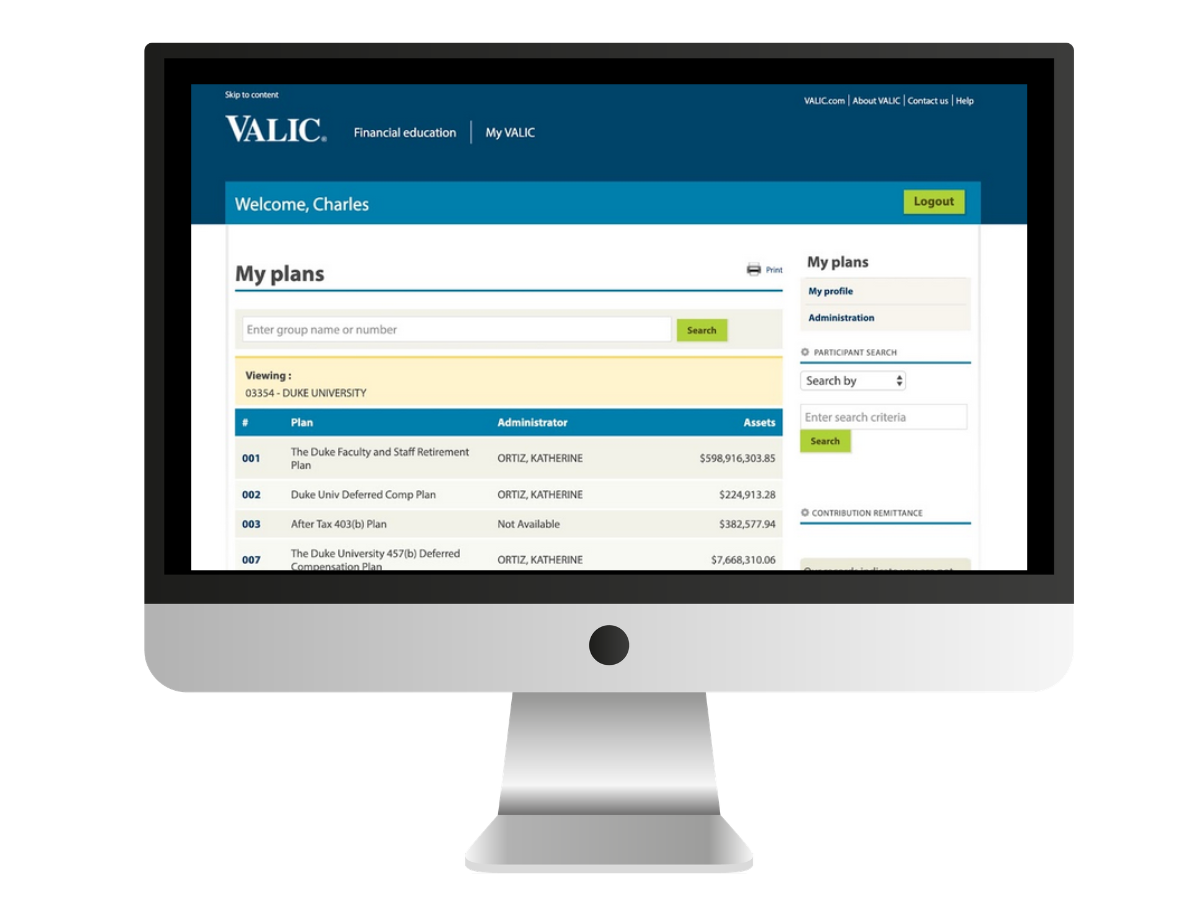
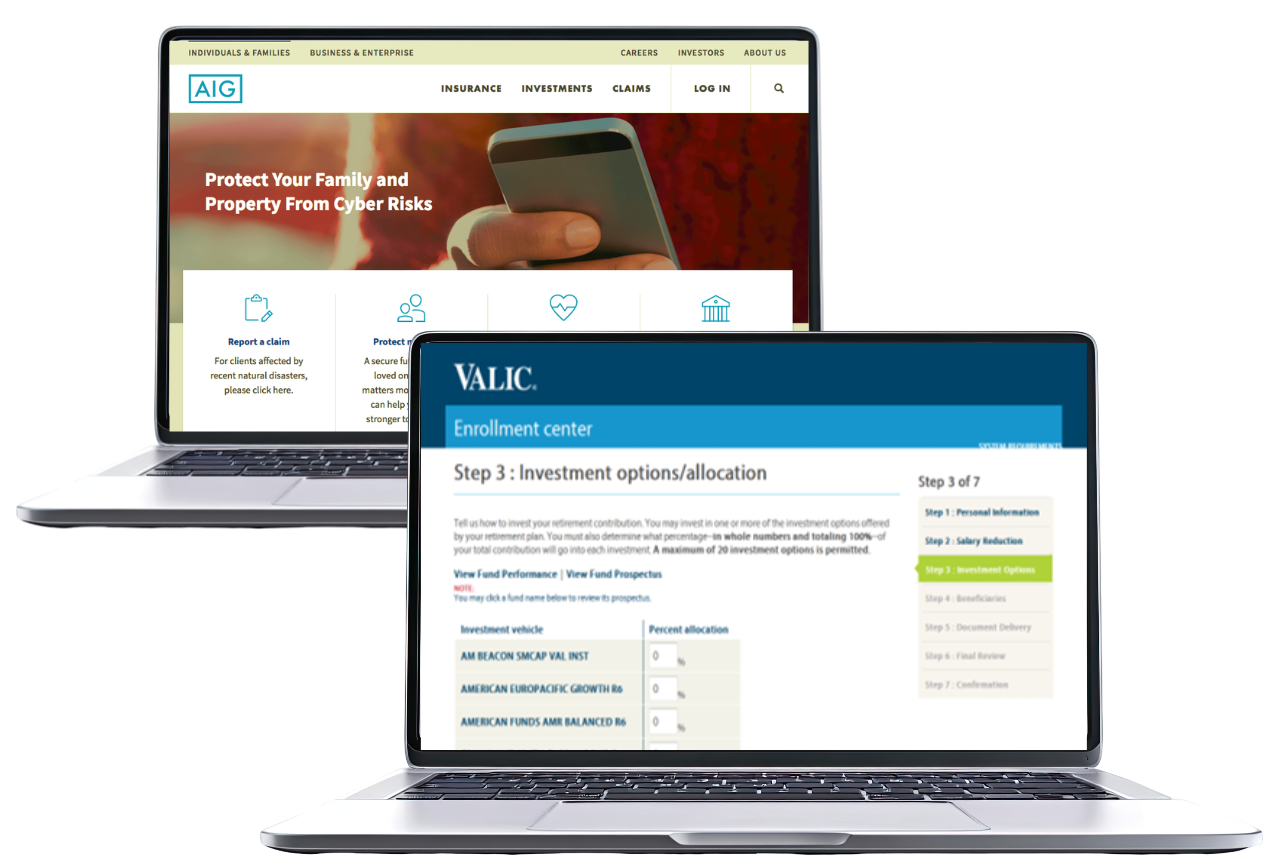
Before

The landing screen looks like a spreadsheet and not a dashboard for multiple streams of data.

Screenshot of VALIC financial planning webpage before redesign.
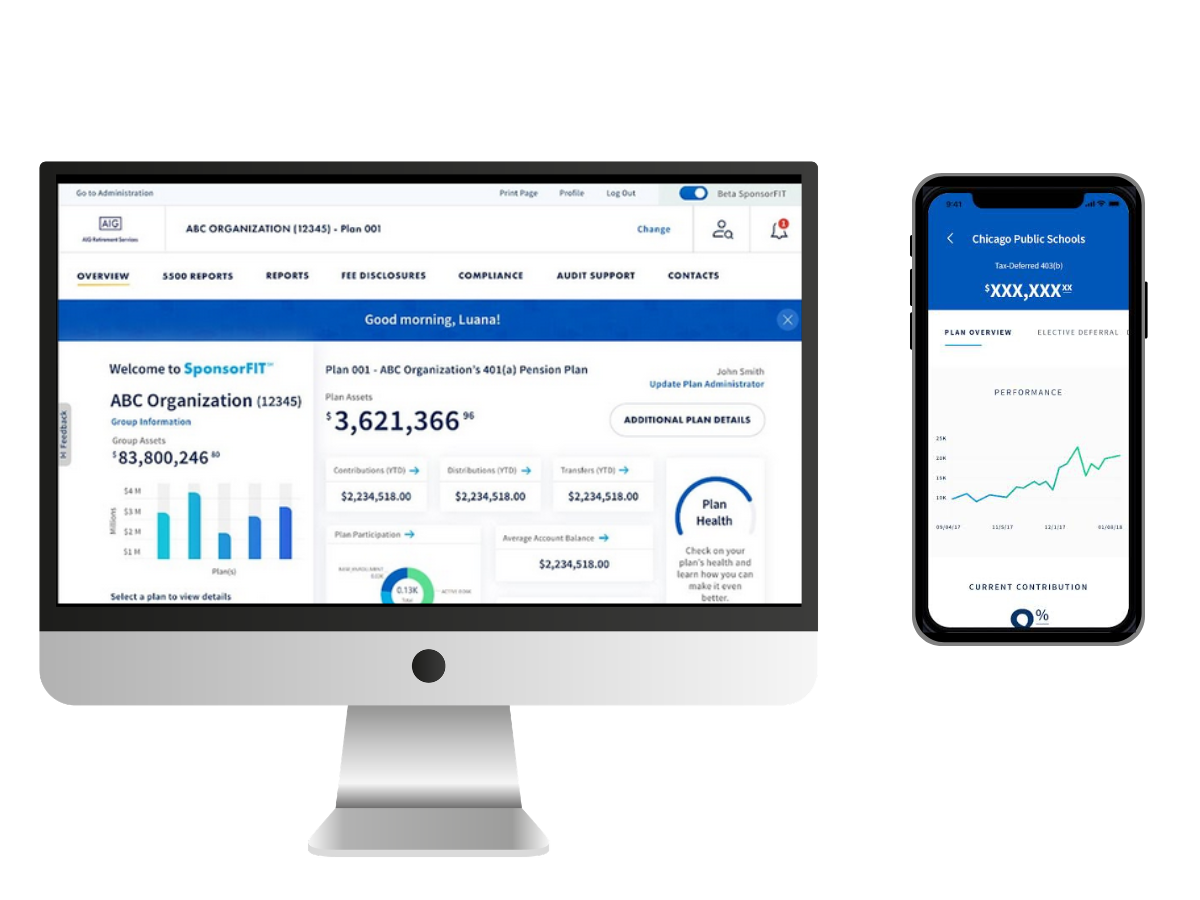
After

The new dashboard approach introduced needed hierarchy and immediate insights. The project included a mobile app to reflect users' need for 24-hour access.

Computer monitor displaying an online report dashboard for a pension plan and a smartphone chart.

FutureFit — platform for employees planning retirement

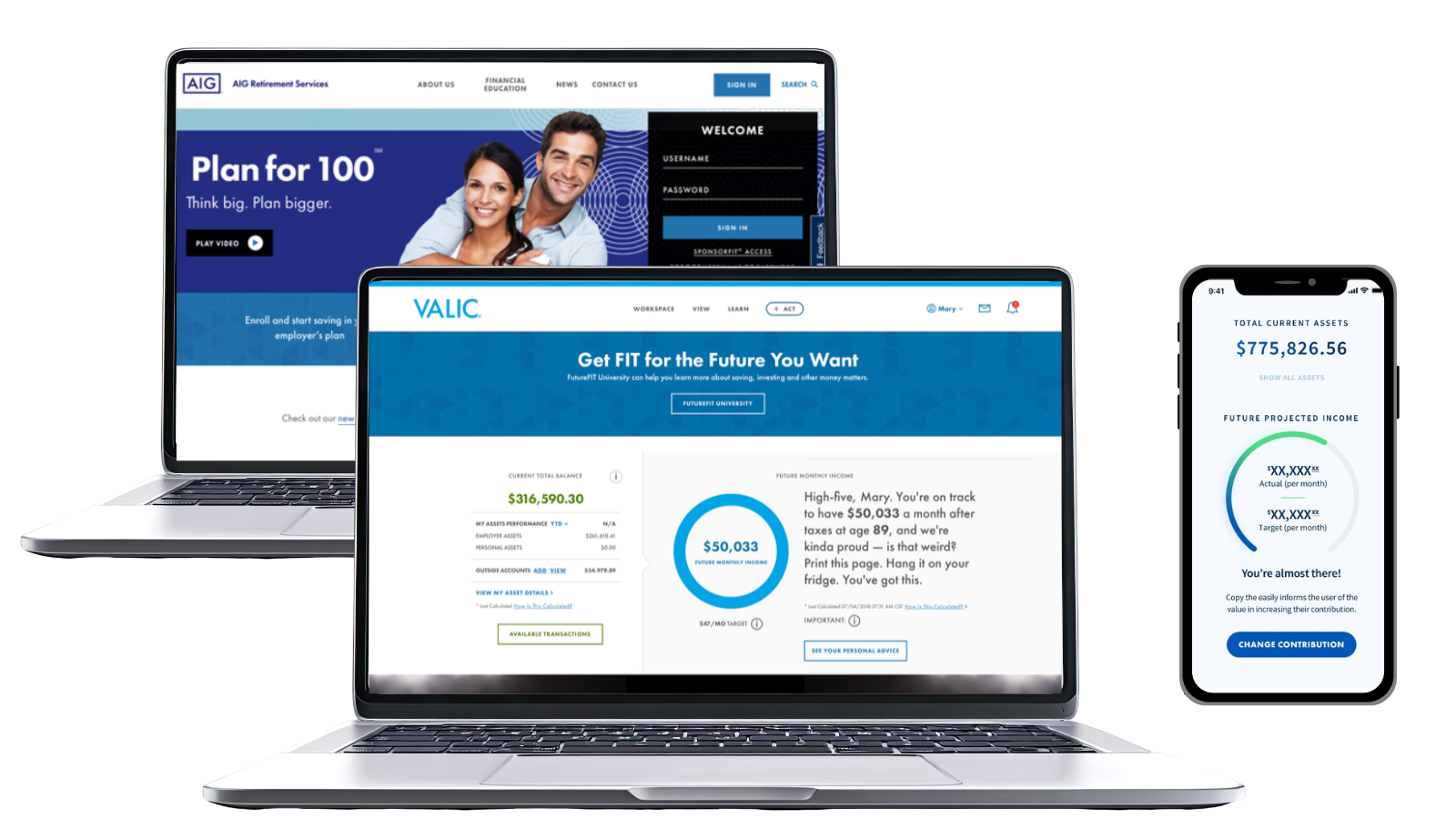
Before

High rates to the call center as employees tried to plan for retirement

Two laptops, one showing AIG website before the redesign, and one after the redesign
After

New dashboard with projections that encourage employees to increase contributions and a new mobile experience.

Laptop screen showing a public facing screen with login, and the landing screen for an employee planning for retirement

Experience design

I directed the design that successfully addressed clients' goals and met VALIC business needs. The new AIG pattern library, Hinge, contributed to the FutureFit launching six weeks early.

Based on call center data and anecdotal client feedback:

  • Call center rates went down.
  • Employees increased their retirement contributions and understand the long-term value of their savings.
  • Users increased their use of complex features like beneficiaries.

Research

I changed how we approached segmentation. I persuaded the product team to explore jobs-to-be-done.

The research discovered 12 jobs-to-be-done. Users' motivations to change their retirement plans were life events: birth, marriage, taxes, raises, etc. These insights changed the approach to messaging and yielded an increase in the users' engagement.

My team

I led the enterprise Experience Design team, based in New York, NY. Three dedicated team members — user experience, visual designer, producer. Four team members working across enterprise projects, plus one vendor — front-end developer, user researcher, research vendor.

Pattern library

Hinge

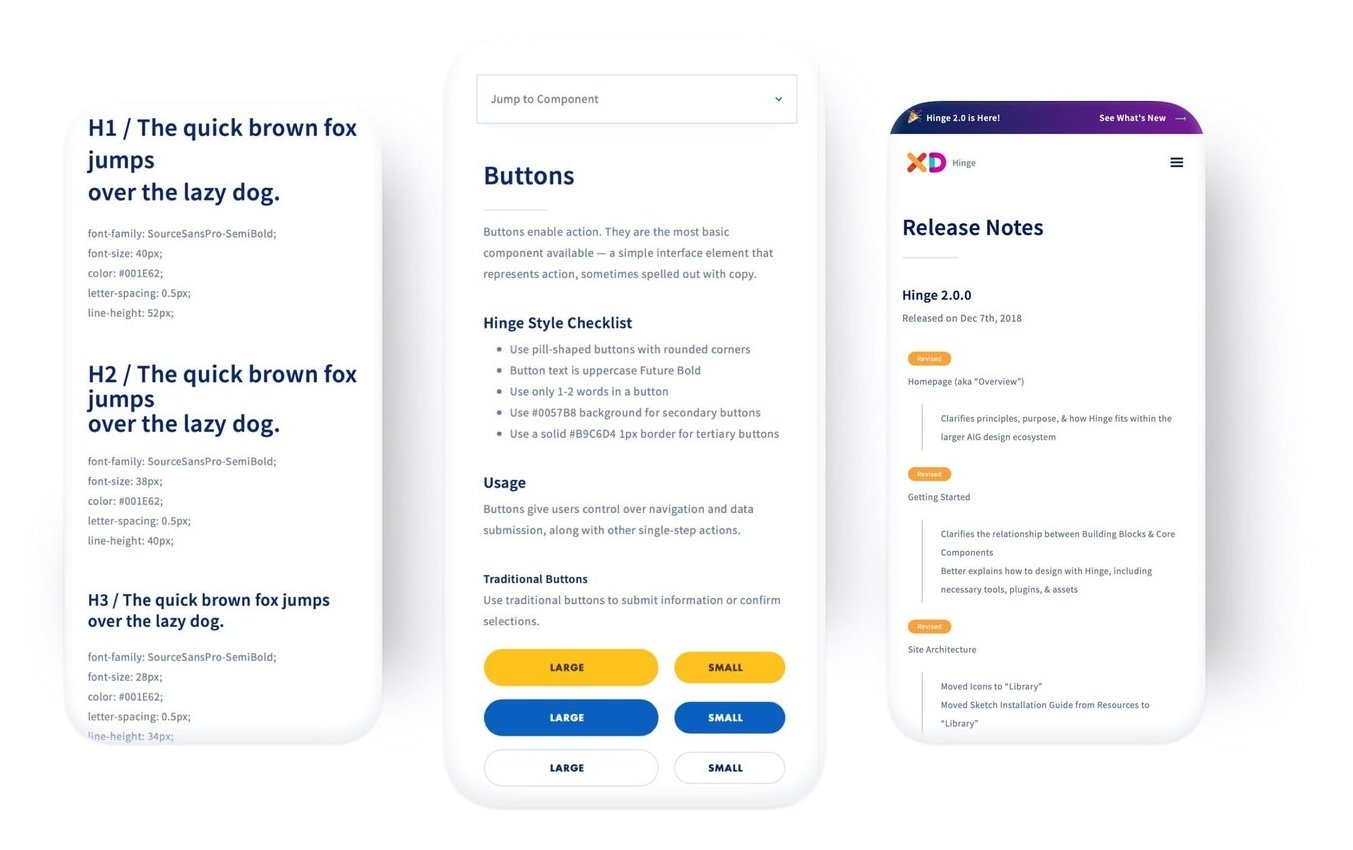
AIG's new enterprise pattern library, with VALIC as its first application. As leader of the VALIC initiative, I collaborated with the team building AIG's nascent Hinge pattern library, and championed the value of the library with all VALIC stakeholders.

  • Product owners and sales teams - I introduced design principles and the value of standards. It allowed the design team to leverage design to communicate hierarchy and inspire user confidence.
  • Technologists - I promoted speed and compliance. The pattern library eased the transition from an external vendor to new, internal teams. And helped the business unit meet enterprise standards for accessibility.
Design guidelines with sections for headings, buttons, and release notes.

Leadership

I took a radical step - I changed the operational model of the enterprise design team

The VALIC and enterprise design teams had conflicting success metrics: client satisfaction versus speed. To work through the friction, I took two approaches: tactical and day-to-day process changes, and changing the enterprise team model from centralized to distributed.

  • Collaborating with VALIC's CTO and product leaders, I hired a design leader on site who reported to me in a dotted-line relationship.
  • The enterprise team continued to own the design library, operate as the accessibility subject-matter experts, and provide production support as needed.
  • Enforcement of the pattern library and use of the related front-end code were moved to the enterprise technology team and became a launch standard across AIG.

Tactical process changes

  • Dual-track agile - I set the design team's schedule two sprints ahead, allowing for more collaborative iteration and time for research.
  • Partnership with QA teams - I worked with the QA teams to include design acceptance testing into their process, adding a technical aspect to design.
  • Earlier in the development lifecycle - I persuaded the scrum masters to include the Experience Design team in big-room planning. Organic, rapid whiteboard ideation provided a basic framework for planning and created a new collaboration.

My collaborators

 · VALIC CTO
· Client Partners and Sales teams
· Marketing
· Product owners
· System and data engineers
 · QA teams
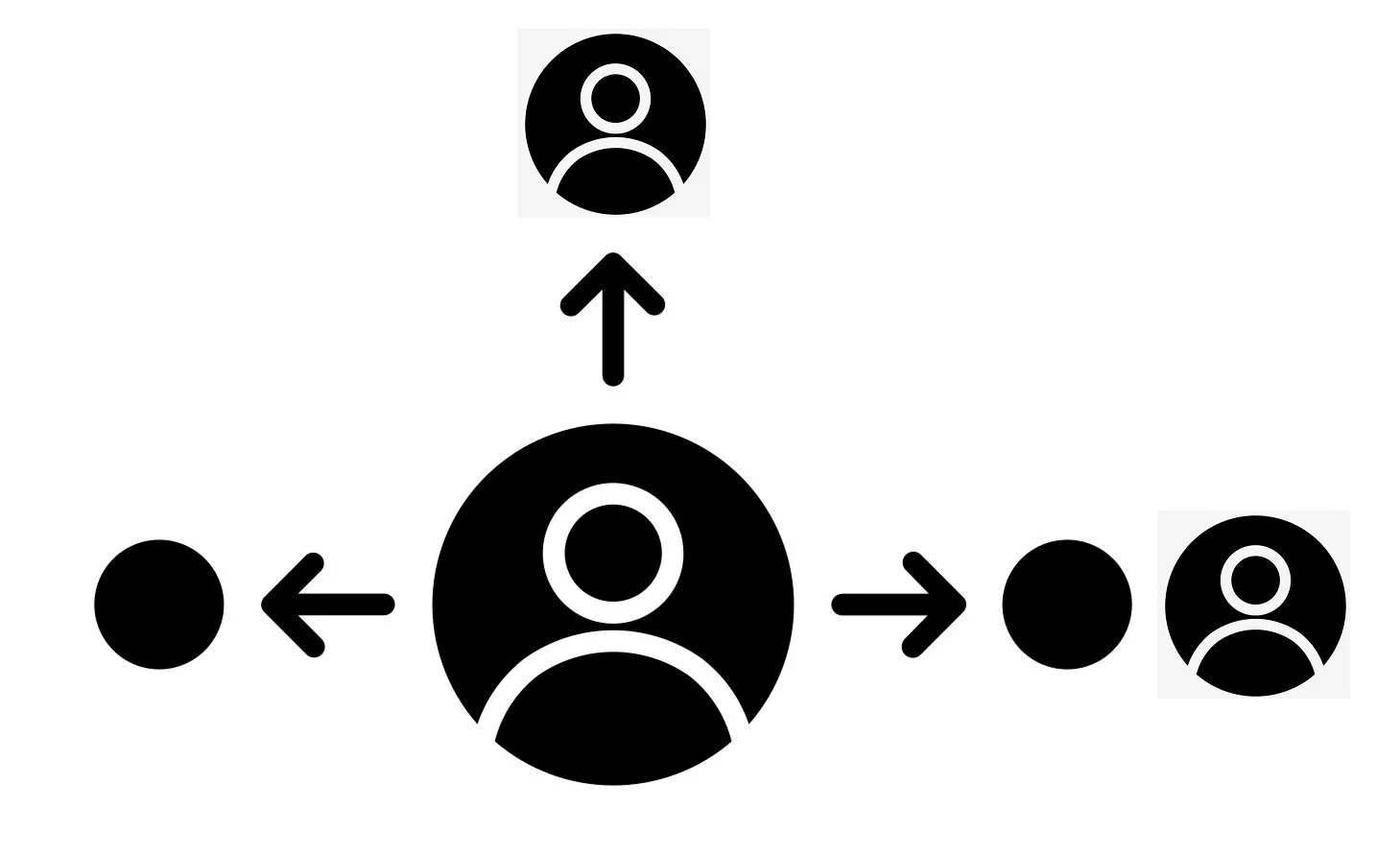
Centralized A spider web diagram illustrating the reporting structure with one team at the center.
  • All projects — pattern library, accessibility standards
  • As needed — experience design, user research
Decentralized A spider web diagram illustrating the distributed reporting structure.
  • All projects — experience design, user research, pattern library, accessibility standards

Growing Careers When I Can't Promote

I've faced this challenge a few times. It's a flat organization, the firm only promotes if there is an opening, or the budget just doesn't allow it.

Three Steps

Retaining top talent takes creative leadership. Rather than relying on vertical promotions, I foster long-term engagement by expanding scope, ownership, and strategic capabilities.

I work to keep the person engaged and prepare them for a new title when it becomes available. And I take the risk that the new title might be outside of my team.

Step 1: Discover Ambitions

As part of my leadership style, I ask a lot of questions about a person's career aspirations and their ambition. It also helps me understand each individual's expectation of the future.
  • Career and skill growth
  • Curious but not sure what they want
  • Happy with where they are

The middle cohort is the toughest. They want me to give them answers. And get frustrated when I tell them that a career in this field isn't a straight line. I suggest a framework for researching and learning about going deep into a specialization or staying a generalist.

Black star to illustrate ambition

Sample questions about ambition

  • Do you want to be a manager? A senior-level individual contributor?
  • What's an area that interests you that you aren't doing?
  • What skills do you have that are untapped?

Step 2: Clarity of Current Role

I think beyond the job description. They are too general to be helpful for daily expectations. At both AIG and Shutterstock, I started from zero. There was no clarity on daily needs for a designer and no parity across the group. We had big gaps.

With both teams, I built a framework based on four categories. And added a collection of sub-skills. It gave the team a chance to learn my expectations and what I value from teams. I use these foundations for self-assessments and building growth plans.

Illustration with a pencil and ruler on a computer monitor, for craft. Craft

T-shaped skills that include everything from user research, facilitation, process diagrams, wires/comps/code, animation, etc.

Illustration of speech bubbles, for communication. Communication

The ability to negotiate, give and receive feedback, and maintain relationships.

Illustration of three people with lines connecting them, for collaboration. Collaboration

Text, diagrams, presentations - the ability to articulately convey one's thoughts. It's old but good: if you can't communicate your idea, it doesn't exist.

A silhouette of a person performing a handstand on top of a mountain. Business

Understand how the company makes money, the difference between growth and cost, and how to measure design.

Self assessment

I was transparent about my goal: a shared understanding so we can work together on growth and annual reviews.

This diagram generated great conversations - some of them difficult. Thinking beyond craft was difficult, and often involved activities people didn't like.

The diagram's subcategories changed based on the company. At Shutterstock, I focused on collaboration. The team had a terrible reputation and we needed to repair it.

Each employee completed a form, I customized by role

Self assessment form with four sections: craft, communication, collaboration, and business.

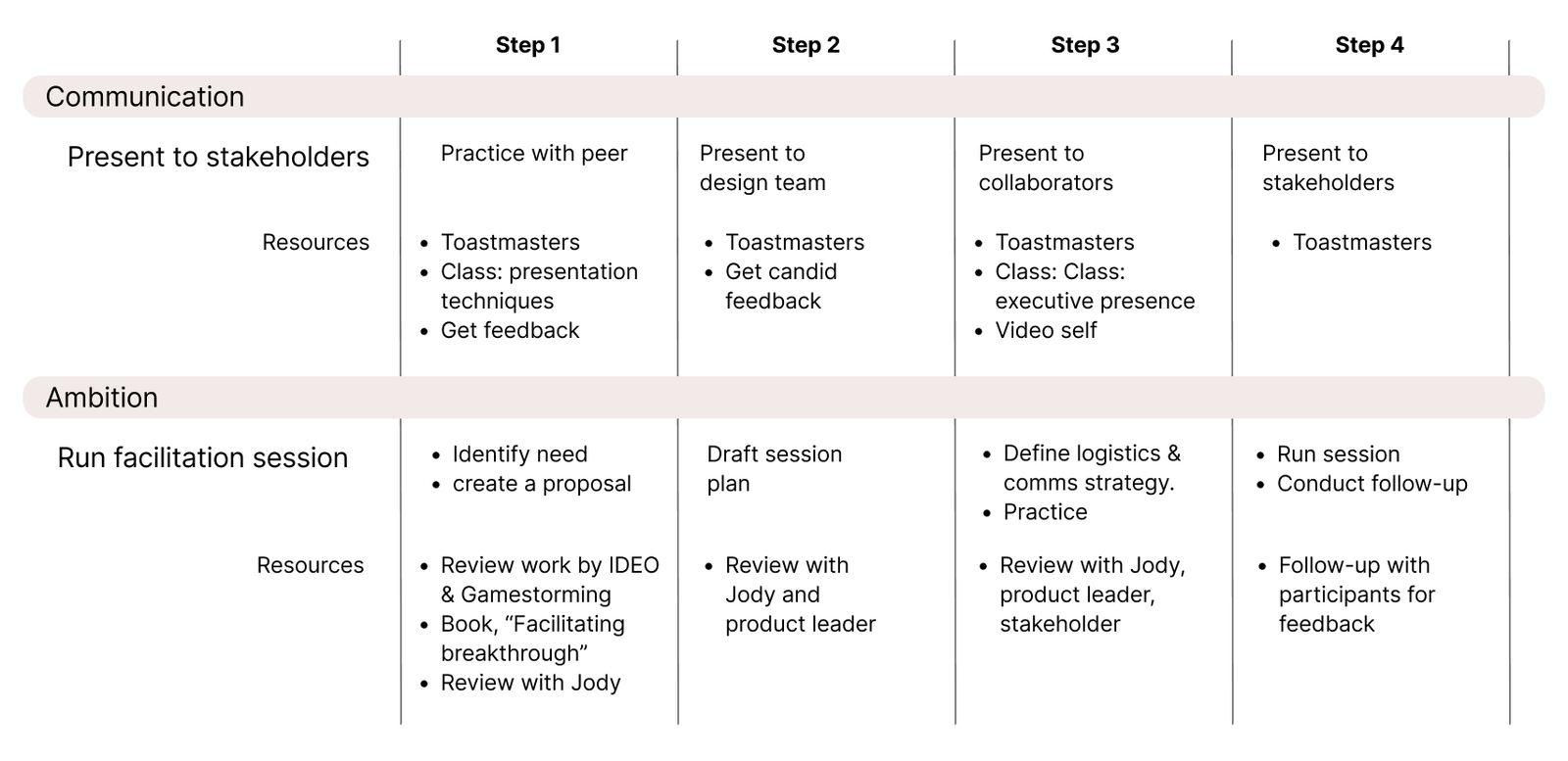
Step 3: Growth Plan

My favorite part of the process is the growth plan. I provided the framework and the most curious would come to me with a draft. For others, the process started as a conversation with me.

For annual goals, these growth areas are in addition to the project work. Although the goal is to integrate career growth into the project work. I did not want it as a separate track.

In the diagram, phases are gates to set expectations and to show when the person needs to pivot.

A collaboration between the team member and me

Growth plan in a table format, with goals, activities by phase, and resources needed.

Setting the Stage

Change is scary, especially when it comes to roles. Before I start the process, I explain why I'm making changes and an outline of what will change.

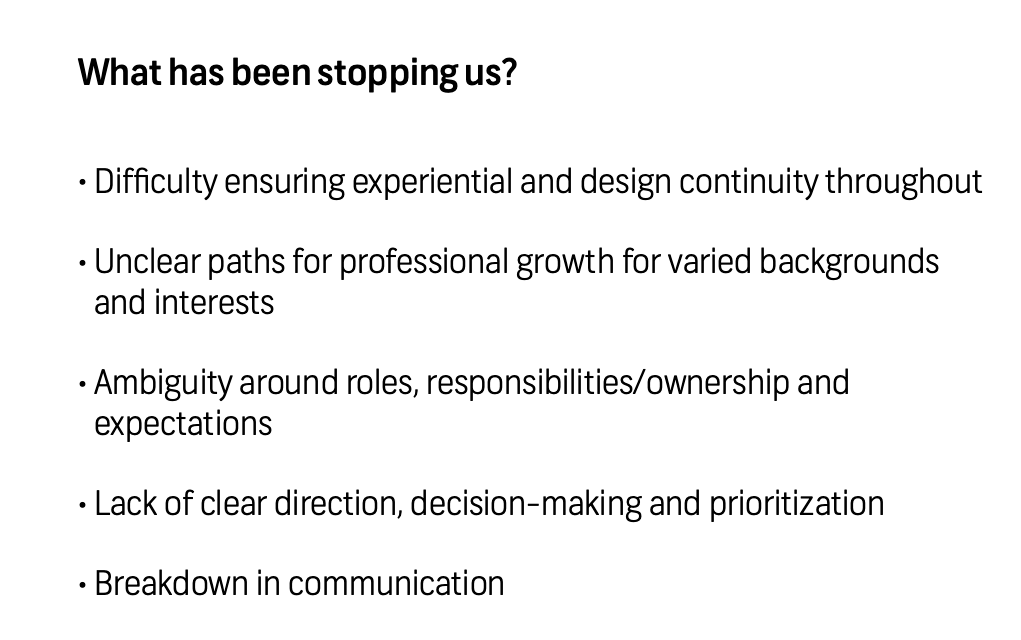
I developed these slides for a team with a terrible reputation when I joined. User Experience had no strategic role, at any level. The team morale was low and the general feeling was that the organization would be happy to see them go.

Building a strategic reputation was a full-team endeavor. In the full presentation, I share specifics, timelines, and my expectations. It worked. The team became a trusted partner, as Shutterstock went through a full-scale replatforming.

Introducing change — slide 1

Change management slide covering what has been stopping us: continuity, growth paths, ambiguity on roles, lack of clear direction, breakdown in communication

Introducing change — slide 2

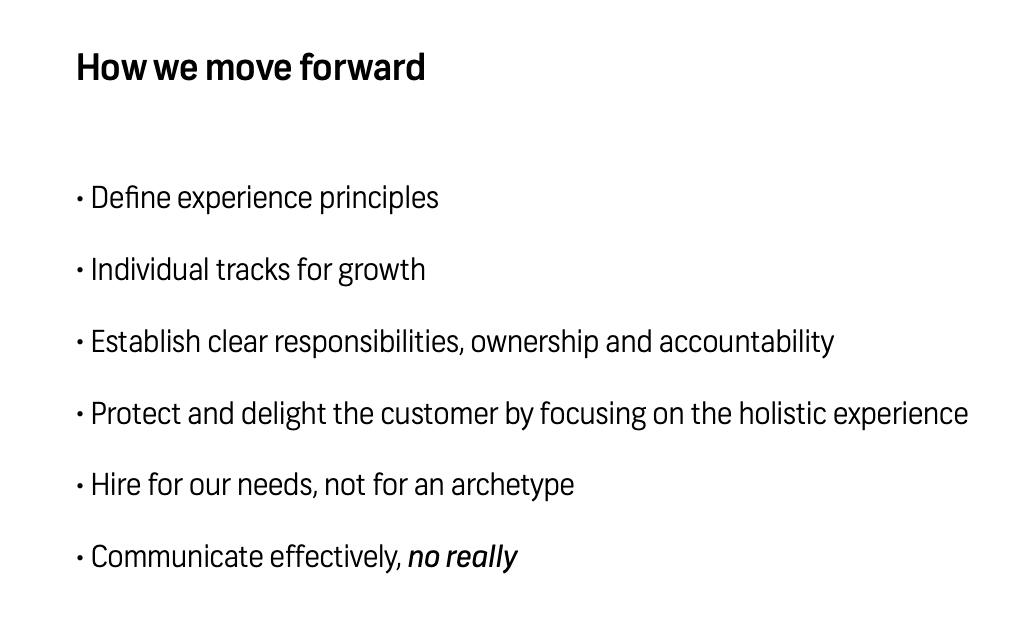
Change management slide: define experience principles, growth tracks, clear responsibility and accountability, focus on holistic experiences, hire for team needs, clear communication.

If we met at a party …

We are more than our resumes.

Grid of images: brooklyn bridge, frida kahlo's home, backgammon board, knitting, ali farid sculpture, empire state building during a bright sunset, baseball field, purple and orange flowers, yayoi kusama yellow sculpture

Maker

As a knitter, I create tangible things. And as part of the creation process, I enjoy color, texture, and shape and form. Another benefit comes from the act of moving yarn from the left needle to the right. The repetitive motion brings clarity to my busy thoughts.

Citizen

Brooklyn lets me feel at home - very important after growing up as a military kid. I love the art, architecture, history, music, and the ever-evolving population. I moved here after the crime went down, but the borough hasn't lost its flavor, and I love calling it home.